
Last updated September 22, 2026
Free on-site gate assessment - hinges, posts, and your LiftMaster or Nice gate operator checked before anything is quoted
The assessment is free and the quote is the invoice.

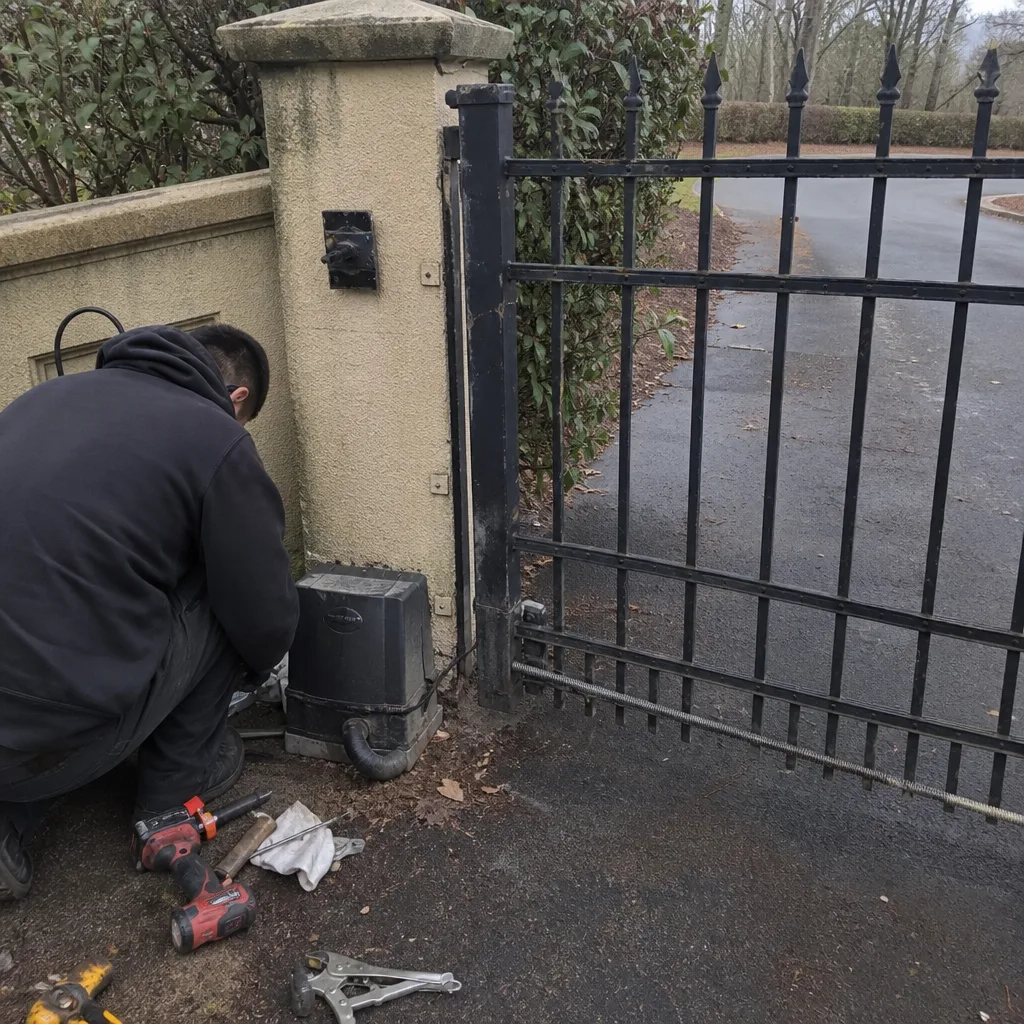 Before
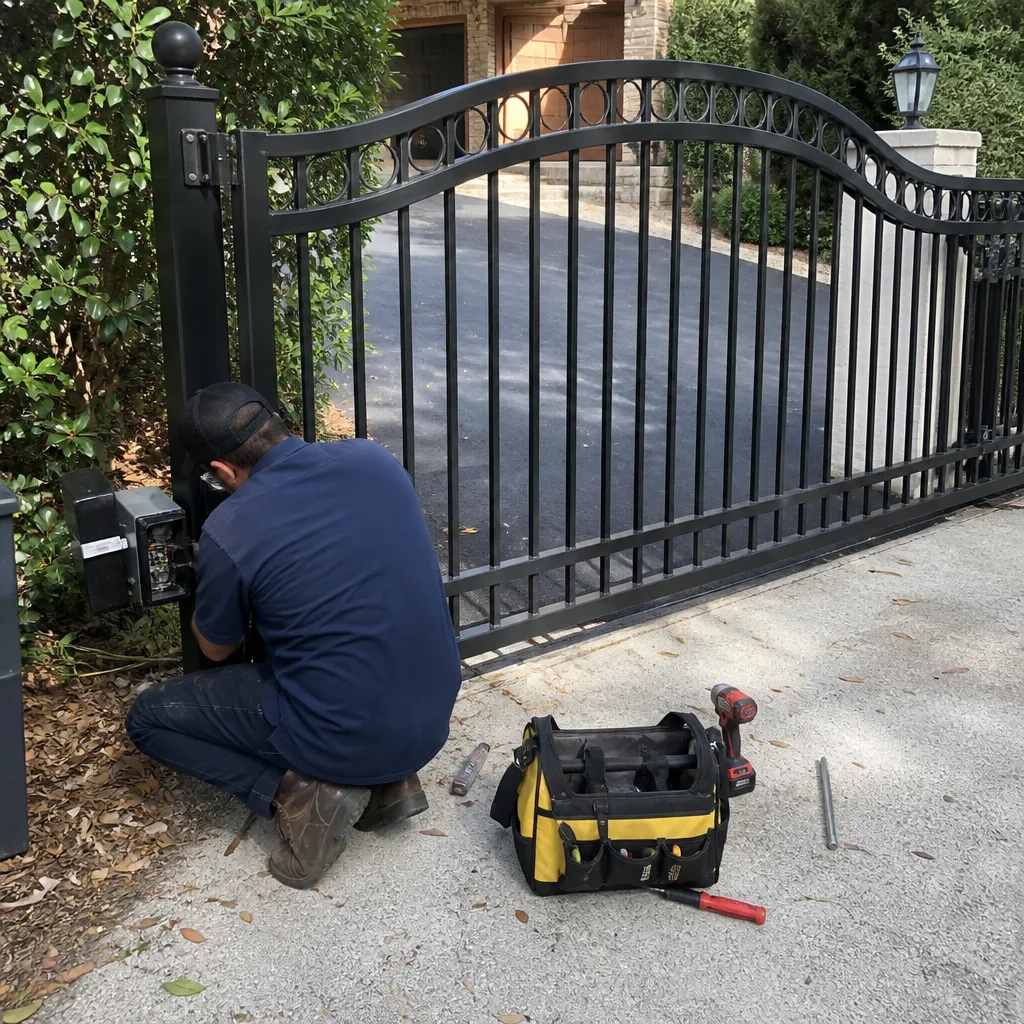 After
After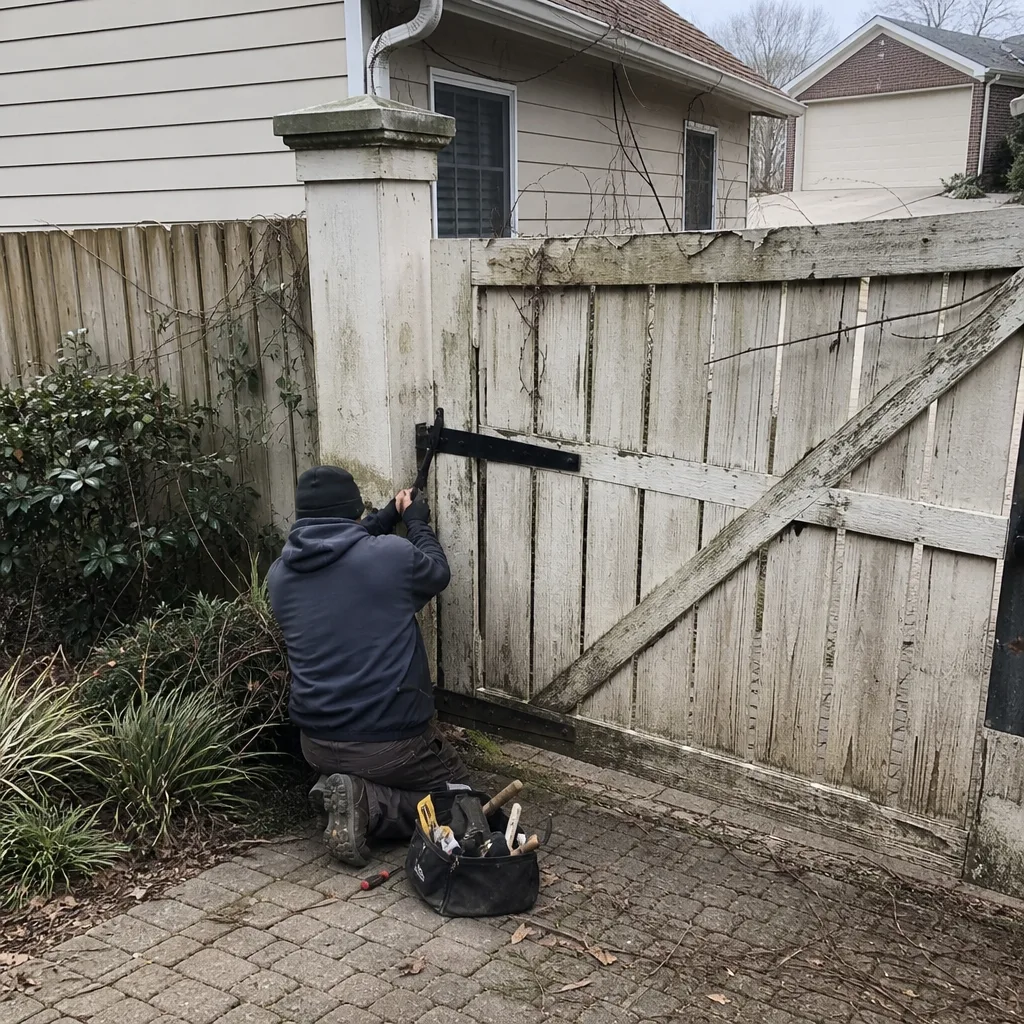 Before
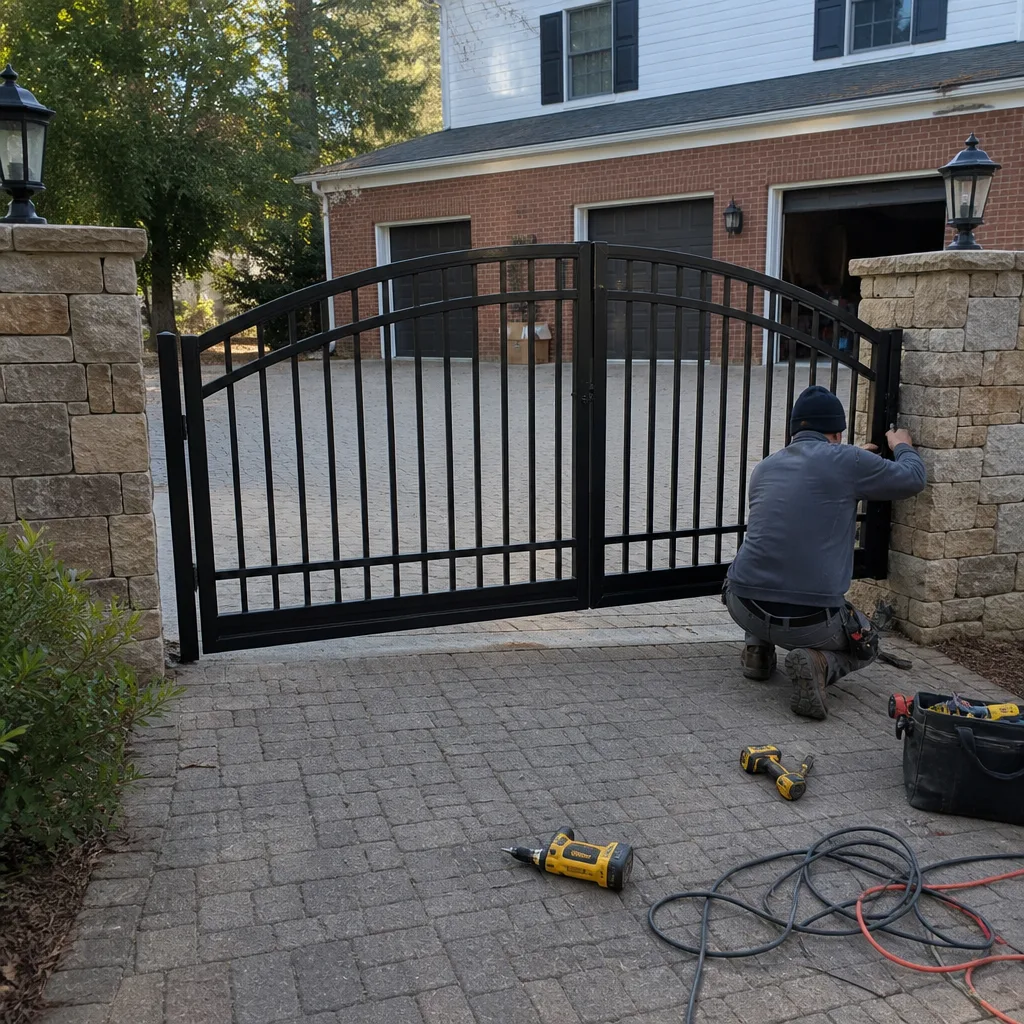 After
After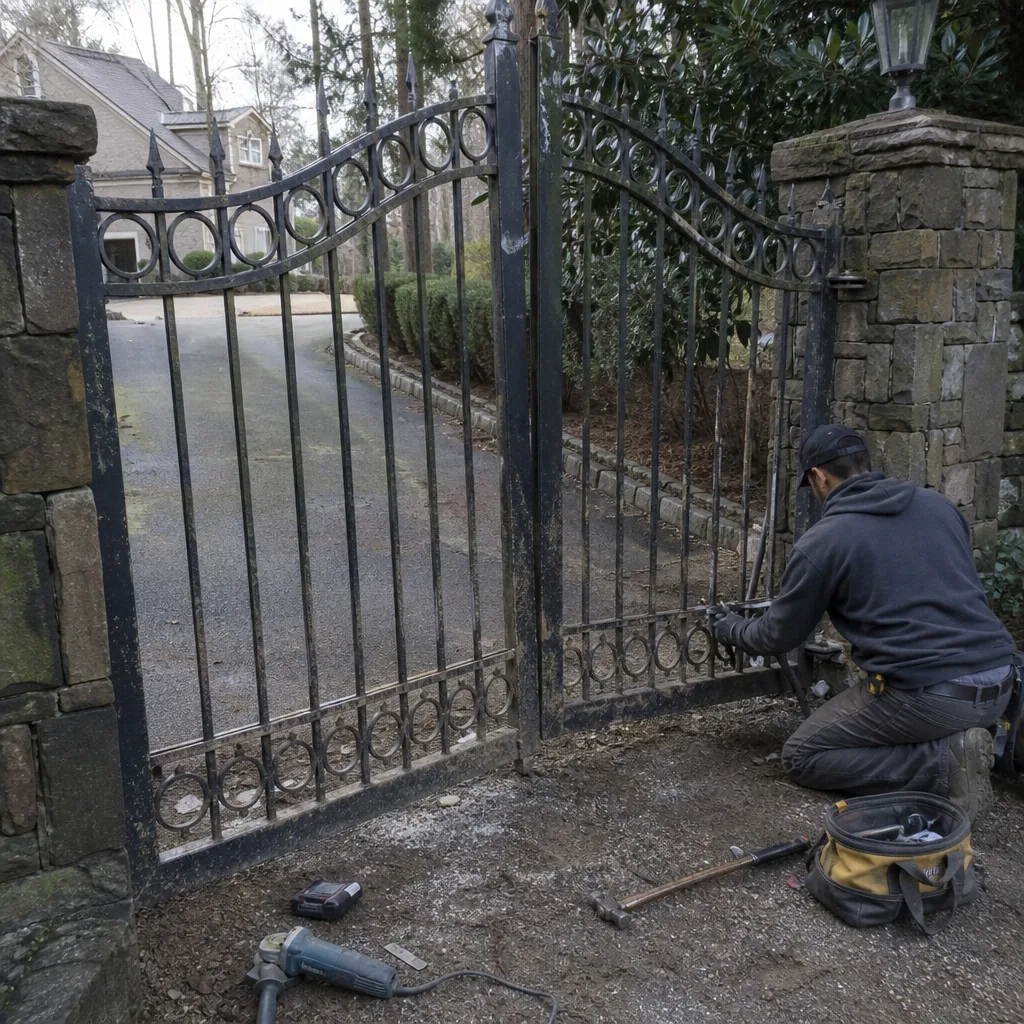 Before
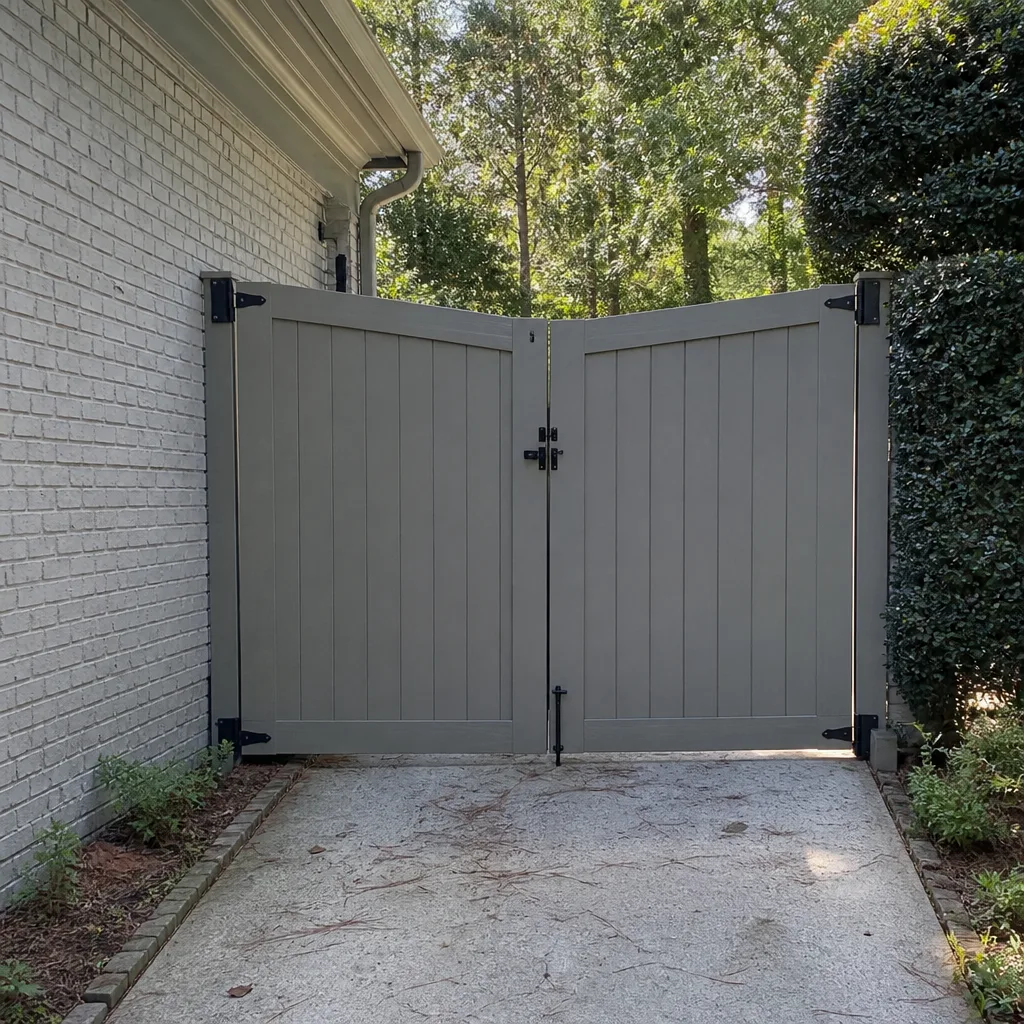 After
AfterDIY vs Professional Gate Repair: The Johns Creek Homeowner’s Decision Guide
The most expensive gate repair call a Johns Creek homeowner can receive is the second one. It’s the diagnostic visit that starts from scratch because no record exists of what was replaced, adjusted, or rewired six months ago. We’ve been called to homes in Country Club of the South and Medlock Bridge where a $45 hinge replacement turned into a $380 diagnostic bill because the previous work was invisible. In this guide, we’ll show you which repairs are genuinely safe to handle yourself, which ones create liability you can’t see coming, and how to document your work like a professional so the next technician doesn’t charge you to rediscover what you already knew. For a deeper look at typical expenses, see our Gate Repair Cost Breakdown: The Johns Creek Homeowner’s Reference for 2026.
Quick Answer
Most Johns Creek homeowners can safely handle manual gate maintenance like hinge lubrication, debris clearing, and photo-eye cleaning. Any repair involving the gate motor, low-voltage wiring, tensioned components, or automation programming should be done by a licensed professional in Georgia, both for safety and because undocumented work voids troubleshooting efficiency on future calls. The true cost difference isn’t the repair itself - it’s the diagnostic overhead when undocumented work has to be reverse-engineered.
Table of Contents
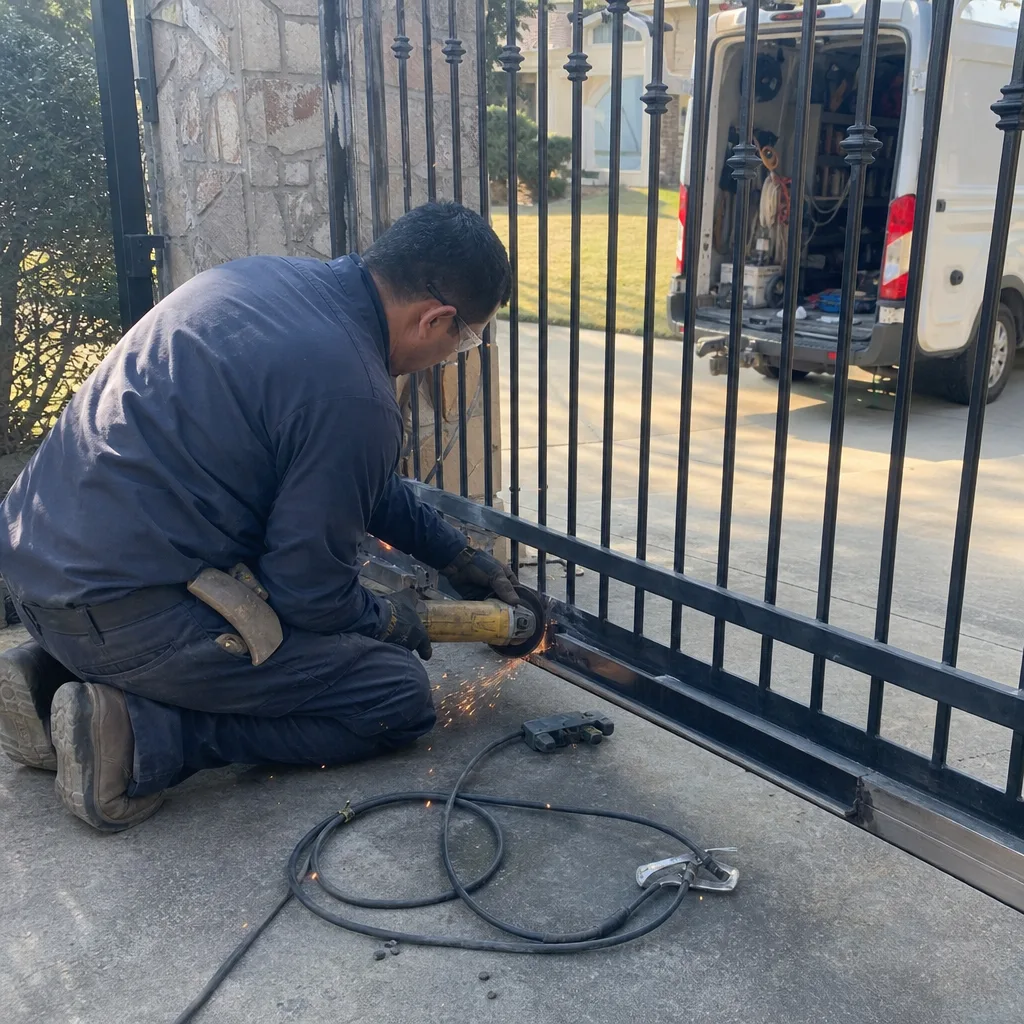
- What Homeowners Can Safely Do Themselves
- Repairs That Legally or Safely Require a Professional
- Georgia Low-Voltage Licensing: What Homeowners Can’t Touch
- The Documentation Standard Every Repair Should Meet
- DIY Costs vs. Professional Costs: The Hidden Diagnostic Tax
- Five Failure Modes That Trace Back to DIY Repairs
- How to Hire the Right Gate Repair Company in Johns Creek
- Common Mistakes to Avoid
- When to Call a Professional
- Frequently Asked Questions
BeforeAfterWhat Homeowners Can Safely Do Themselves
There’s a narrow but real band of gate maintenance that rewards the careful homeowner. These tasks share three traits: they’re reversible, they don’t interact with the automation system, and a mistake won’t damage property or injure someone.
Safe Maintenance Tasks
- Photo-eye cleaning: The infrared safety beam (photo-eye) that stops the gate if a child or pet crosses the path gets coated with pollen, especially in Johns Creek’s heavy spring season from March through May. Wipe the lens with a soft cloth and check alignment by passing a broom handle through the beam while the gate is closing. The gate should reverse immediately. If it doesn’t, note which eye is the transmitter (usually marked) and whether the LED is steady or blinking.
- Track and roller debris removal: Sliding gates along the Chattahoochee River corridor collect oak leaves and silt that jam the track. A shop vacuum and a wire brush restore normal travel. Document the roller condition with your phone - flat spots or bearing noise mean replacement is coming.
- Hinge lubrication: Use a lithium-based grease, not WD-40, on manual gate hinges. WD-40 evaporates and attracts dust in Georgia’s humidity. Cycle the gate ten times after lubricating to work the grease into the pin. Note the date - hinges on Johns Creek’s clay-heavy soils tend to need attention every four to six months.
- Control box exterior inspection: Look for ant nests, moisture intrusion, or wasp mud tubes. In Johns Creek, we’ve found fire ant colonies inside FAAC and Linear control boxes that caused intermittent shorts. Document what you see, but don’t open the box unless you’ve verified power is disconnected at the breaker.
The Reversibility Test
Before starting any DIY work, ask: can I put this back exactly as I found it? If the answer is no, stop. A misaligned photo-eye can be returned to its original position. A spliced low-voltage cable cannot. A lubricated hinge can be wiped clean. A recalibrated limit switch cannot be eyeballed back to its factory setting.
We recommend photographing everything before you touch it. Not just the overall gate - close-ups of bolt positions, wire routing, and any labels or dip-switch settings. Store these with the date in a dedicated folder. This habit, borrowed from commercial access-control documentation, is the single biggest factor in whether your DIY work saves money or creates future cost.
Repairs That Legally or Safely Require a Professional
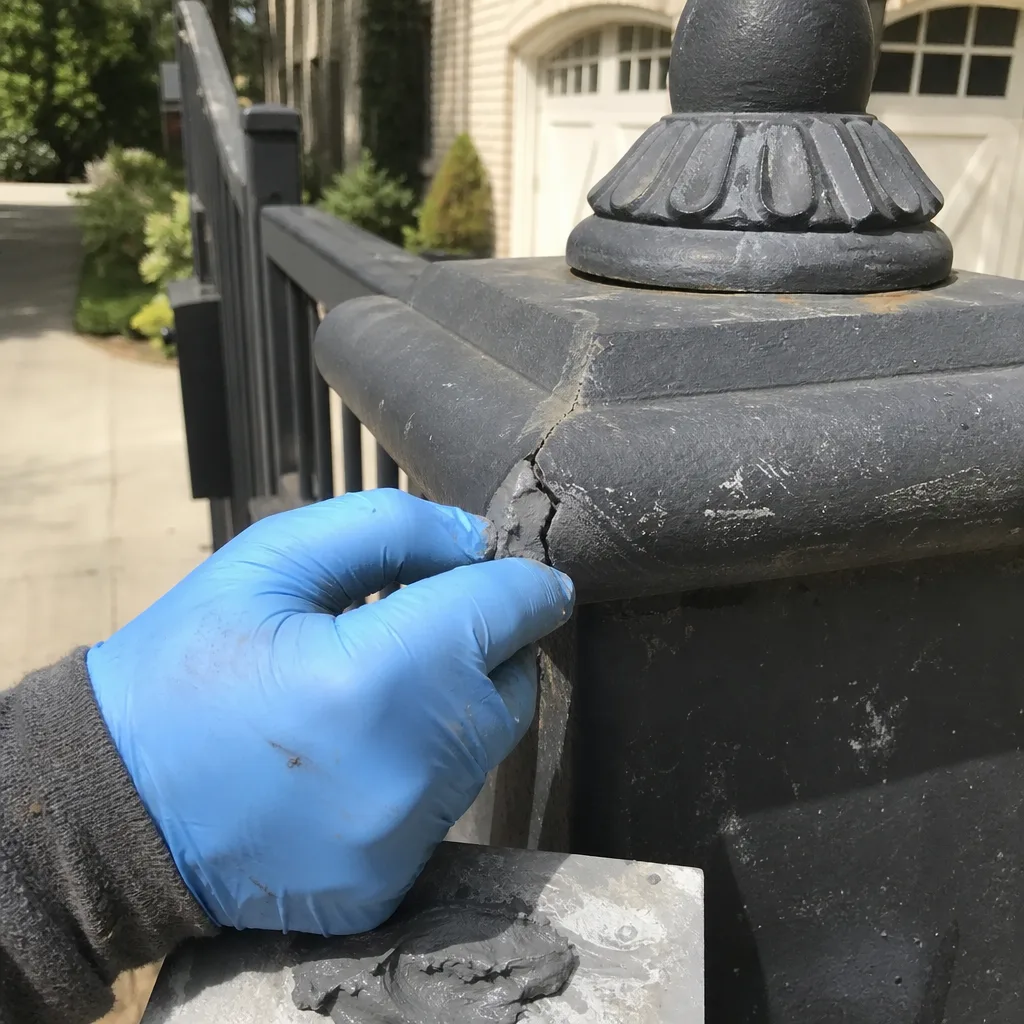
Some gate components carry risk that isn’t obvious until failure. Others fall under Georgia licensing law regardless of your competence. Here’s the line we draw based on eleven years of residential and commercial Gate Repair services.
High-Tension Mechanical Components
Swing gates with spring-assisted operators (common on Viking and heavier BFT systems) store significant energy in torsion or extension springs. A spring failure during adjustment can lacerate or cause head trauma. We’ve responded to two Johns Creek homes where homeowners attempted spring replacement after watching online tutorials. In both cases, the gate arm detached and damaged the masonry pillar. The repair cost exceeded professional spring replacement by 400%.
Chain-drive sliding gates also maintain tension. The chain tensioner on a Linear or DoorKing system isn’t a simple bolt - it’s a calibrated component that affects motor current draw and limit-switch accuracy. Over-tensioning accelerates sprocket wear. Under-tensioning causes chain skip and false obstruction signals.
Electrical and Automation Work
Any work inside the control box beyond visual inspection crosses into licensed territory. This includes:
- Replacing or splicing low-voltage wiring to photo-eyes, loop detectors, or keypads
- Adjusting dip switches or programming buttons that set motor force, travel limits, or safety sensitivity
- Installing or relocating any component that connects to household power, even if the component itself is low-voltage
- Resetting or replacing circuit boards after power surge events - common in Johns Creek’s summer thunderstorm season
The force settings on modern operators are not arbitrary. They’re calibrated to the gate’s weight, wind load, and safety-edge response time. A homeowner who increases force to compensate for a binding hinge is masking a mechanical problem and creating a crush hazard. When we document a service call, we record the force reading in amps and the limit-switch position in degrees. Without that baseline, future troubleshooting is guesswork.
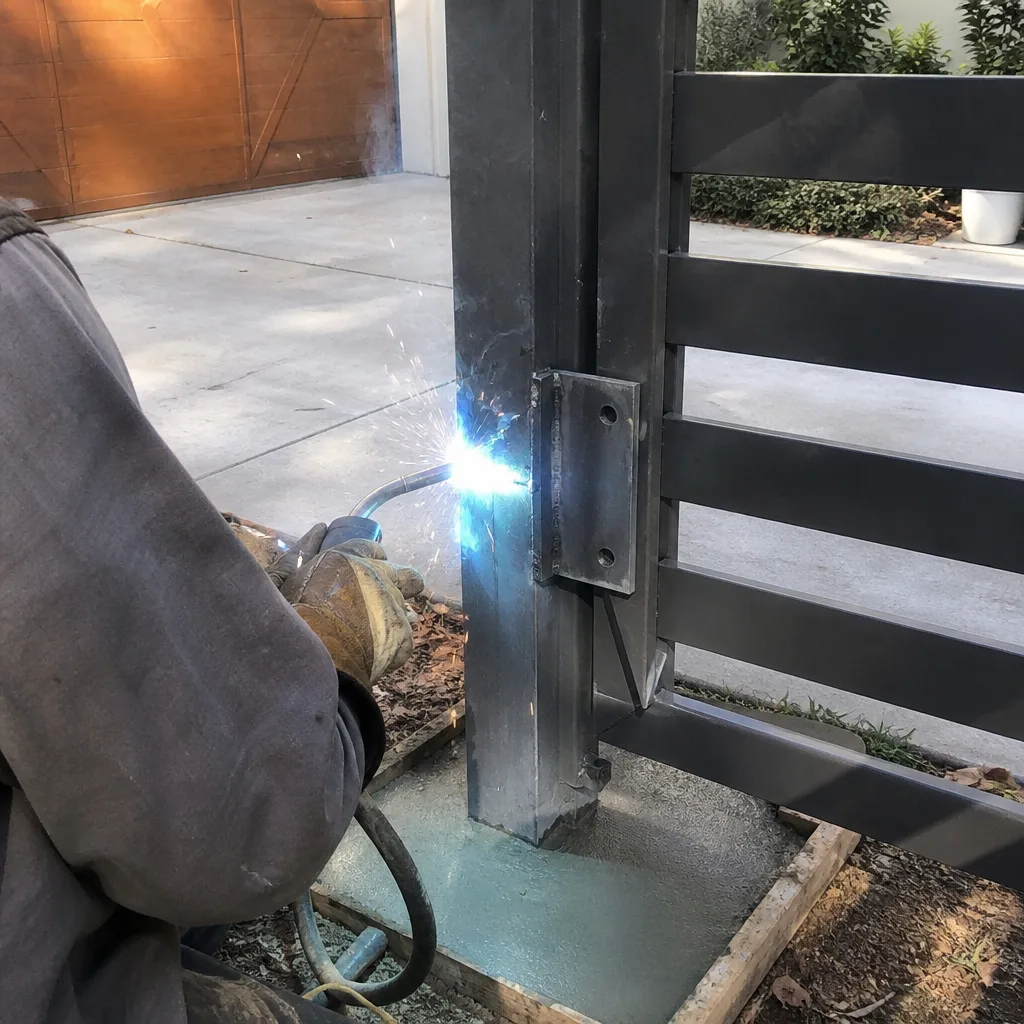
Welding and Structural Repair
Aluminum driveway gates in Johns Creek’s established neighborhoods - particularly the ornamental styles common in St. Ives and The River Club - develop fatigue cracks at weld points. Aluminum welding requires AC TIG equipment and argon shielding gas. More importantly, it requires knowing whether the crack indicates a design flaw that will recur. We’ve replaced gates that were welded three times by handymen before the homeowner called us to assess why the same joint kept failing.
Georgia Low-Voltage Licensing: What Homeowners Can’t Touch
Georgia requires a state low-voltage contractor’s license for any work on access control systems, gate automation, and integrated security components. This isn’t a formality - it’s enforced because these systems interact with public safety.
The relevant classification is the Georgia Low Voltage Contractor license (LV), which covers systems under 50 volts that control access, safety, or automation. A homeowner working on their own property is technically exempt from licensing for purely personal, non-commercial work. But the exemption collapses in several common scenarios:
- HOA or covenant restrictions: Many Johns Creek subdivisions, including those along State Bridge Road and Medlock Bridge Road, require licensed work for any modification to perimeter gates. The HOA’s insurance carrier often mandates this.
- Insurance implications: If an unlicensed repair contributes to property damage or injury, your homeowner’s policy may deny coverage. We’ve seen this dispute arise after automated gates damaged vehicles during uncontrolled closure.
- Permit requirements: New gate installation or substantial electrical modification in Fulton County may require a permit with licensed contractor sign-off. Johns Creek’s building department can confirm whether your project triggers this.
More practically, the exemption doesn’t protect you from the documentation problem. An unlicensed repair that fails creates the same diagnostic dead end as any other undocumented work. The technician who arrives next has no baseline, no part number, no calibration setting. You’re paying for investigation, not just repair.
The Documentation Standard Every Repair Should Meet
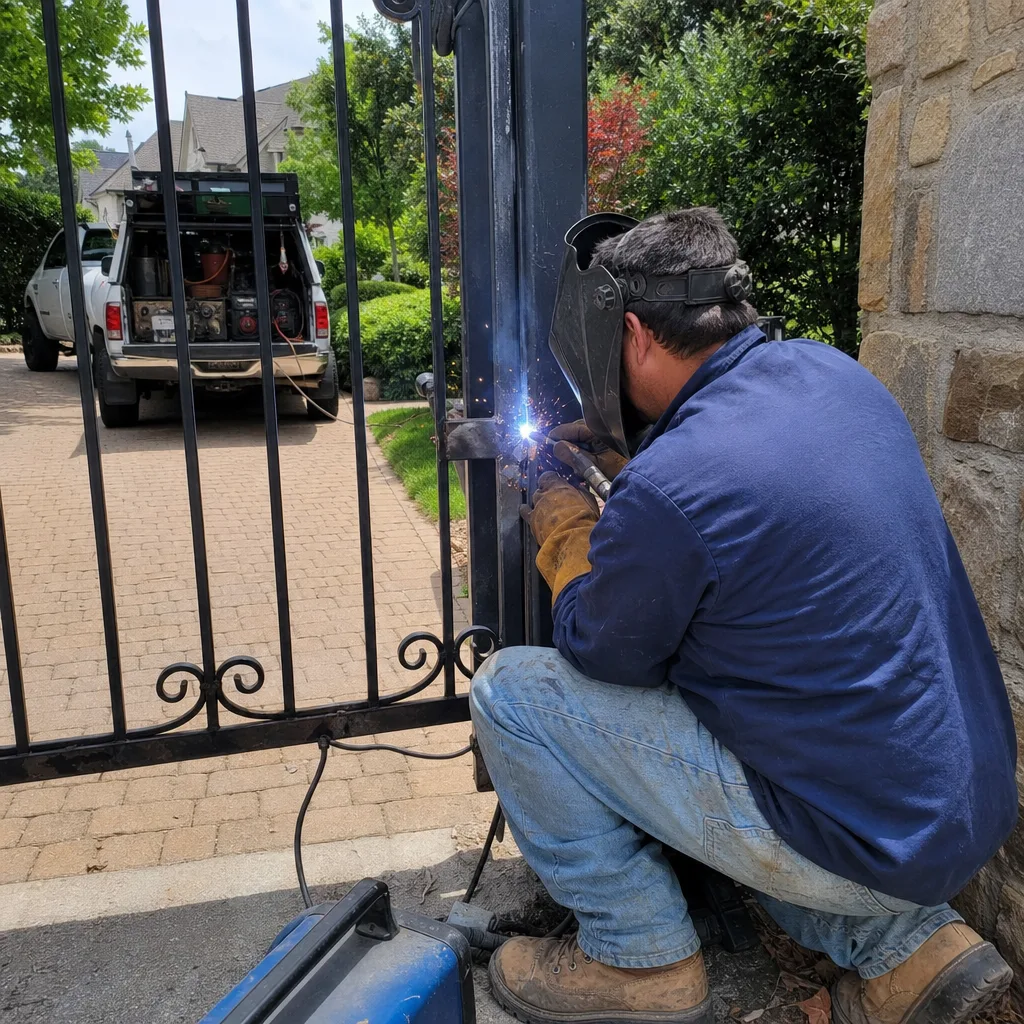
Whether you DIY or hire out, every gate repair should produce a record that answers four questions for the next person who touches the system. This is the core of Vance Gate Repair Johns Creek home practice, derived from commercial access-control documentation standards we adopted in 2014.
The Four-Question Record
- What was the observed condition? Not “gate broken.” Specific: “photo-eye LED blinking 4x (misalignment code), receiver shifted 2 inches north from mounting bracket.”
- What was done? “Replaced FAAC 785102 receiver bracket. Realigned beam. Tested obstruction response with 6-inch block at 3 approach angles.”
- What was the final setting or position? “Limit switch A (open) set to 87 degrees. Limit switch B (close) set to 2 degrees past latch contact. Force setting: 3.2 amps.”
- What was installed, with what part number? “FAAC 785102 bracket, S/N visible in photo 4. Torque: 18 ft-lbs.”
Creating DIY Documentation
If you do the work yourself, replicate this standard with your phone and a notebook:
- Photograph every component before disconnection, including wire colors and terminal numbers
- Photograph any labels, part numbers, or barcode stickers
- Record settings in writing before you change them - dip switches, potentiometer positions, display readings
- Photograph the completed work from multiple angles
- Store everything with the date in cloud storage, not just on your phone
Under Gate Repair in Johns Creek, our Haven Standard Clause 4 (Evidence on every job) means you receive this record automatically. But the standard itself is transferable. A homeowner who produces a four-question record when calling for future service will receive faster, cheaper diagnosis because the technician starts with facts instead of discovery.
DIY Costs vs. Professional Costs: The Hidden Diagnostic Tax
The internet comparison of DIY versus professional gate repair typically shows parts cost versus parts-plus-labor. This is wrong. The meaningful comparison includes diagnostic overhead: the time and money spent figuring out what someone else already knew.
Typical Repair Scenarios in Johns Creek
| Repair Type | DIY Parts Cost | Professional Repair Range | Typical Diagnostic Cost if DIY Fails |
|---|---|---|---|
| Photo-eye replacement (pair) | $35-$80 | $180-$280 | $150-$220 (reverse alignment, test obstruction response, document) |
| Hinge replacement (single, manual gate) | $25-$60 | $140-$220 | $120-$180 (check remaining hinges, assess post integrity) |
| Limit switch adjustment | $0 | $160-$240 | $180-$260 (full control box diagnostic, recalibrate from scratch) |
| Control board replacement | $180-$450 | $480-$890 | $220-$340 (determine why board failed, check for surge damage) |
| Gate motor replacement (swing) | $400-$1,200 | $1,400-$2,800 | $280-$420 (assess arm geometry, post stability, wiring condition) |
The diagnostic tax hits hardest on control and automation work. A homeowner who replaces a photo-eye with a generic unit (not matched to the operator brand) may create an intermittent failure that takes two hours to reproduce. At standard diagnostic rates, that’s $300 to discover what a $50 matched part would have prevented.
In Johns Creek’s competitive service market, we offer free second opinions on any written estimate from another company. Bring your documentation - even DIY documentation - and we’ll review it at no cost. Under Haven Standard Clause 1, any work we propose gets a written price before we start.
The Multiplier Effect
Undocumented work compounds. A homeowner in Abbotts Bridge replaced a hinge, adjusted the close limit to compensate for sag, and increased motor force when the gate began stalling. Three months later, the operator failed. The technician faced: an undocumented hinge replacement of unknown spec, a limit switch set to an unknown position, and a force setting that masked the real problem. The diagnostic alone was $265. The actual repair - replacing the hinge properly and recalibrating from factory baseline - was $340. Total: $605. Professional hinge replacement and calibration from the start: $380.
Five Failure Modes That Trace Back to DIY Repairs
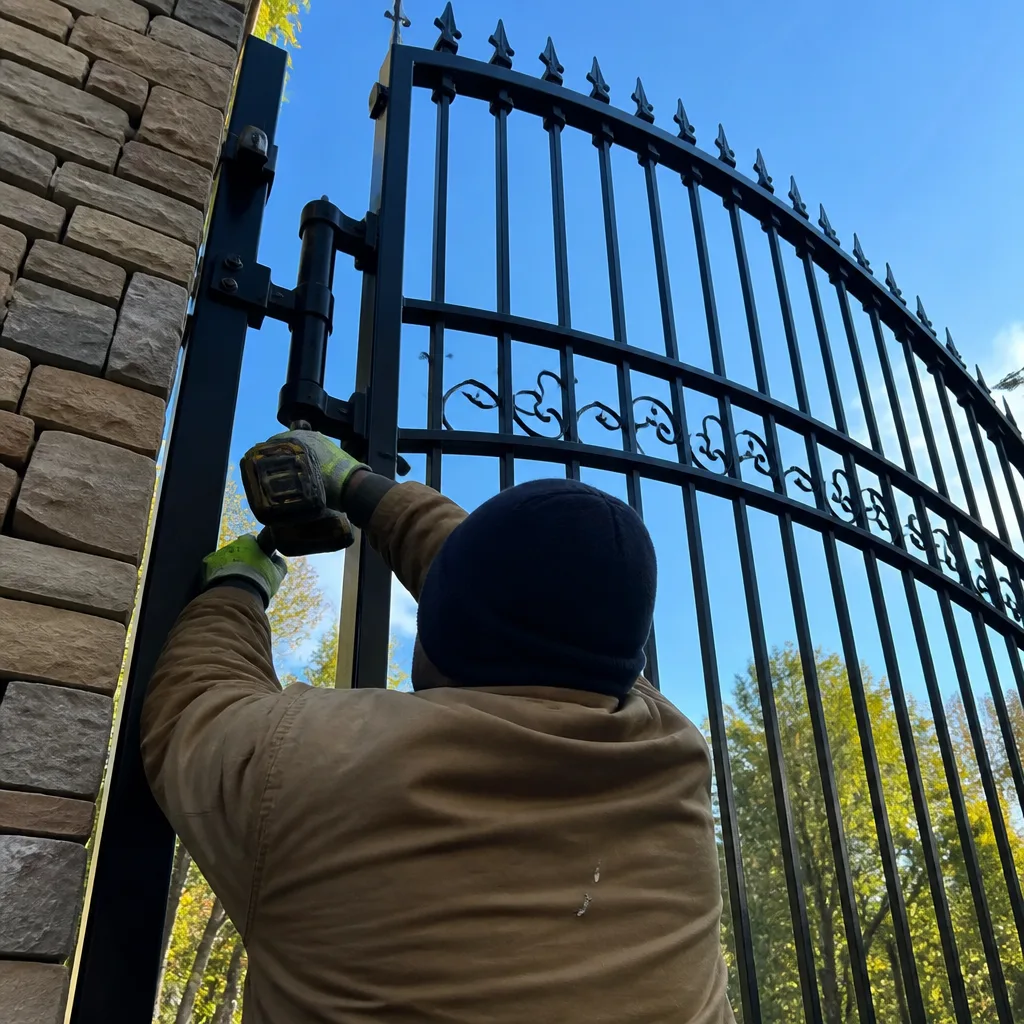
After 22,000+ gates since 2014, we’ve identified patterns in the calls that follow homeowner work. These aren’t skill judgments - they’re documentation failures that would have been prevented by a written record.
1. The Wire-Nut Splice in Low-Voltage Cable
Photo-eye and keypad cables in Georgia humidity corrode inside wire nuts. The proper repair is a waterproof splice kit or full cable replacement. We’ve found wire nuts wrapped in electrical tape that held for two months, then introduced resistance that made the gate behave as if the photo-eye was blocked. The diagnostic challenge: the splice is often buried in conduit or underground. Without knowing it exists, we test every component upstream before discovering the hidden failure point.
2. The Force-Setting Workaround
A binding hinge or bent track increases mechanical resistance. The homeowner’s shortcut: turn up motor force until the gate closes anyway. This works until it doesn’t. The operator’s safety edge (required by UL 325) is calibrated to stop the gate against a specific resistance. Increased force overrides that protection. We’ve documented crushed auto body panels and, in one Johns Creek case, a gate that failed to stop against a delivery driver’s hand.
3. The Universal Remote Pairing
After-market remotes paired without clearing previous codes create phantom signals. The gate opens at 2 AM, or closes on a car in the driveway. The diagnostic requires accessing the receiver’s memory - simple if you know the brand and model, hours if you’re reverse-engineering an unlabeled receiver installed by a previous owner who left no record.
4. The Limit Switch “Close Enough”
Limit switches tell the operator when to stop opening and closing. They’re set with the gate physically at each extreme position. A homeowner who eyeballs this (“it looks about right”) creates drift. Over twenty cycles, the gate closes harder against the stop. Over two hundred, it damages the arm bracket or the gate itself. The Gate Motor & Opener in Johns Creek service we provide includes photographing the limit position with a digital level - documentation that prevents drift.
5. The Grounding Omission
Gate operators must be grounded to the same potential as household electrical service. A homeowner who runs new power from a convenience outlet may create a ground differential. During lightning events - frequent in Johns Creek’s July afternoon storms - this destroys control boards through the ground path rather than the power path. The symptom looks like surge damage. The cause is installation practice. Without documentation of how power was run, the technician replaces the board and watches it fail again.
How to Hire the Right Gate Repair Company in Johns Creek
If the repair exceeds your documentation comfort zone, the hiring decision matters as much as the repair itself. Johns Creek has gate service companies ranging from single-truck operators to national franchises. Here’s what to verify.
Documentation Promise
Ask specifically: will I receive a written record of what was found, what was adjusted, and what was installed? If the answer is a verbal summary or a line-item invoice with part descriptions like “control board,” you’re buying undocumented work. At Vance Gate Repair, every visit under Haven Standard Clause 4 produces a photo log and written record at no additional charge. For a complete maintenance schedule, see our Gate Repair Maintenance Checklist for Johns Creek Homeowners.
Brand Breadth
A company that services only one or two brands has incentive to recommend replacement when repair is viable. We maintain parts and programming capability for nine major brands - LiftMaster, FAAC, BFT, Linear, Viking, Ghost Controls, DoorKing, Elite, and Mighty Mule. This means we repair what’s on your property rather than steering you toward what we stock.
Pricing Structure
Demand written price before work starts. Not an estimate range - a fixed price for the described scope. Under Haven Standard Clause 1, we provide this on every job. If additional work is needed, we stop, explain, and obtain written authorization before continuing. No surprise invoice at the end.
Technician Identification
Background-checked, uniformed technicians with name and photo provided before arrival protect your security and establish accountability. This is standard for our Johns Creek dispatches.
Common Mistakes to Avoid
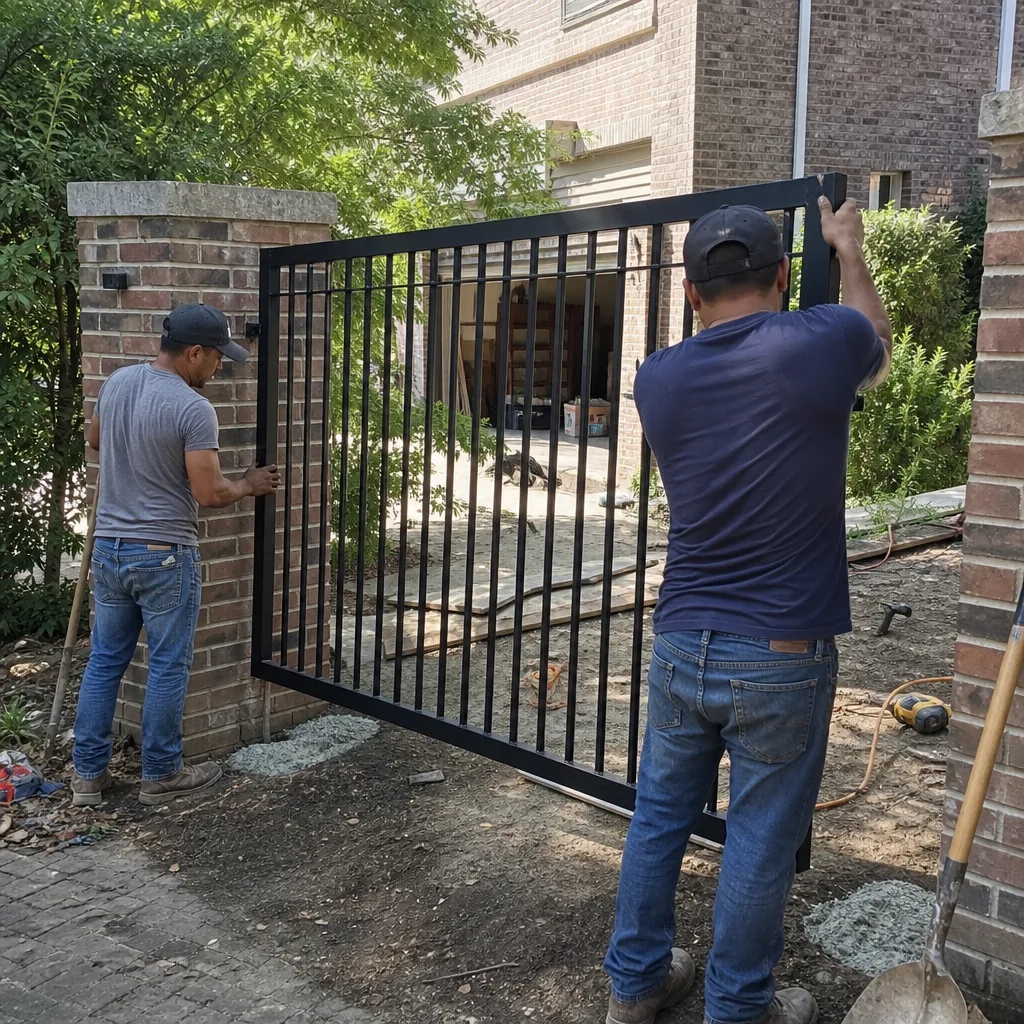
- Using online video as sole instruction: Gate repair tutorials rarely match your specific brand, model year, or local code. A Viking VGT operator from 2019 has different force-calibration steps than the same model from 2022. Video is a supplement, not a replacement for manufacturer documentation.
- Ignoring the manual release: Every automated gate has a manual release for power failure. Homeowners who disable it “because it was loose” trap themselves during outages. In Johns Creek’s ice storm season, a functional manual release is essential.
- Mixing brands in repair: A FAAC photo-eye on a Linear operator may communicate on a different frequency or pulse pattern. The gate works intermittently, or not at all, and the mismatch is invisible without brand-specific diagnostic tools.
- Neglecting seasonal maintenance: Georgia’s pollen season packs photo-eye lenses. Summer humidity corrodes terminal blocks. Winter temperature swings contract expansion joints on sliding gate tracks. A maintenance log prevents emergency calls.
- Assuming the gate is the problem: We’ve traced “gate won’t close” to a failed GFI outlet, a tripped breaker on a different circuit, and a landscape timer that shared a neutral. Document the full electrical environment, not just the gate components.
- Discarding old parts: The part number on a failed control board or motor helps identify compatible replacements and reveals patterns (this model has a known capacitor failure). Photograph and retain failed components until the repair is proven.
- Skipping the safety test: After any repair, test every safety function: photo-eye obstruction, edge sensor response, manual release, and auto-reverse on contact. Document the test with date and result.
When to Call a Professional
Call a licensed gate technician when the repair involves: motor or control box internals, any electrical connection beyond plugging in a pre-wired component, welding or structural modification, spring or tensioned components, or any situation where you cannot produce a four-question record you’re confident in.
Call immediately if the gate is moving unpredictably, making grinding or clicking sounds from the motor housing, or has damaged any vehicle or person. These are safety failures, not maintenance issues.
Vance Gate Repair Johns Creek offers free estimates in Johns Creek - call (678) 394-1765. A live person answers 24 hours a day. We’ll review your documentation, assess the gate in person, and provide a written price before any work starts. If you have an estimate from another company, we’ll review it free under our second-opinion policy.
Frequently Asked Questions
Most residential gate repairs in Johns Creek range from $180 for minor photo-eye or limit-switch work to $890 for control board replacement with full recalibration. Gate motor replacement on swing gates typically runs $1,400-$2,800 depending on brand and whether the arm bracket needs replacement. We provide a written, fixed price before starting any work - call (678) 394-1765 for a free estimate.
Homeowners can perform electrical work on their own single-family residence without a license, but gate automation falls under low-voltage contractor licensing when it involves access control, safety systems, or integration with other security components. HOA requirements and insurance coverage often override this exemption. More importantly, unlicensed work that fails creates the same documentation void as any DIY repair, making future diagnosis more expensive.
Photo-eye cleaning and alignment, track debris removal, hinge lubrication with lithium grease, and visual inspection of control box exterior are safe for careful homeowners. These tasks are reversible, don’t interact with automation programming, and produce visible results that can be photographed and documented. Any task requiring tools inside the control box, wire splicing, or mechanical tension adjustment exceeds safe DIY scope.
Photograph every component before disconnection, record all settings in writing before change, note part numbers and brands, photograph completed work from multiple angles, and store everything with date in cloud storage. Create a four-question record: what was observed, what was done, what was the final setting, and what was installed with what part number. This documentation standard, derived from commercial access-control practice, is the single biggest factor in whether DIY work saves money long-term.
Intermittent failure after homeowner adjustment usually indicates a setting at the edge of tolerance - limit switch position, photo-eye alignment, or force calibration - that drifts with temperature, humidity, or mechanical wear. In Johns Creek’s variable climate, a setting that works at 8 AM may fail at 3 PM. Without documentation of the original and adjusted positions, a technician must rediscover the baseline instead of correcting a known drift.
We service and maintain nine major automation brands: LiftMaster, FAAC, BFT, Linear, Viking, Ghost Controls, DoorKing, Elite, and Mighty Mule. This breadth means we repair what’s installed on your property rather than steering toward replacement with a brand we prefer. For Gate Installation in Johns Creek, we can recommend brands based on your specific gate geometry and usage pattern, but our repair service is brand-agnostic.
The Bottom Line
The DIY versus professional question for gate repair in Johns Creek isn’t about your skill with tools. It’s about whether you can produce a record that makes the next repair faster and cheaper than the last. The homeowner who documents a hinge replacement with photos, torque specs, and date saves money. The homeowner who replaces a photo-eye with a mismatched generic unit, adjusts the limit switch by eye, and throws away the packaging buys a future diagnostic bill that erases every dollar saved. For more guides & resources on proper documentation and repair practices, explore our blog.
Professional service at its best - the Haven Standard we operate under - isn’t about keeping homeowners away from their own property. It’s about ensuring that every repair, whether done by us or documented by you, leaves the next person with facts instead of mysteries. The most expensive call is the one that starts from zero.
Written by Adrian Vance, Owner at Vance Gate Repair Johns Creek, serving Johns Creek since 2014.