
Last updated September 22, 2026
Free on-site gate assessment - hinges, posts, and your LiftMaster or Nice gate operator checked before anything is quoted
The assessment is free and the quote is the invoice.

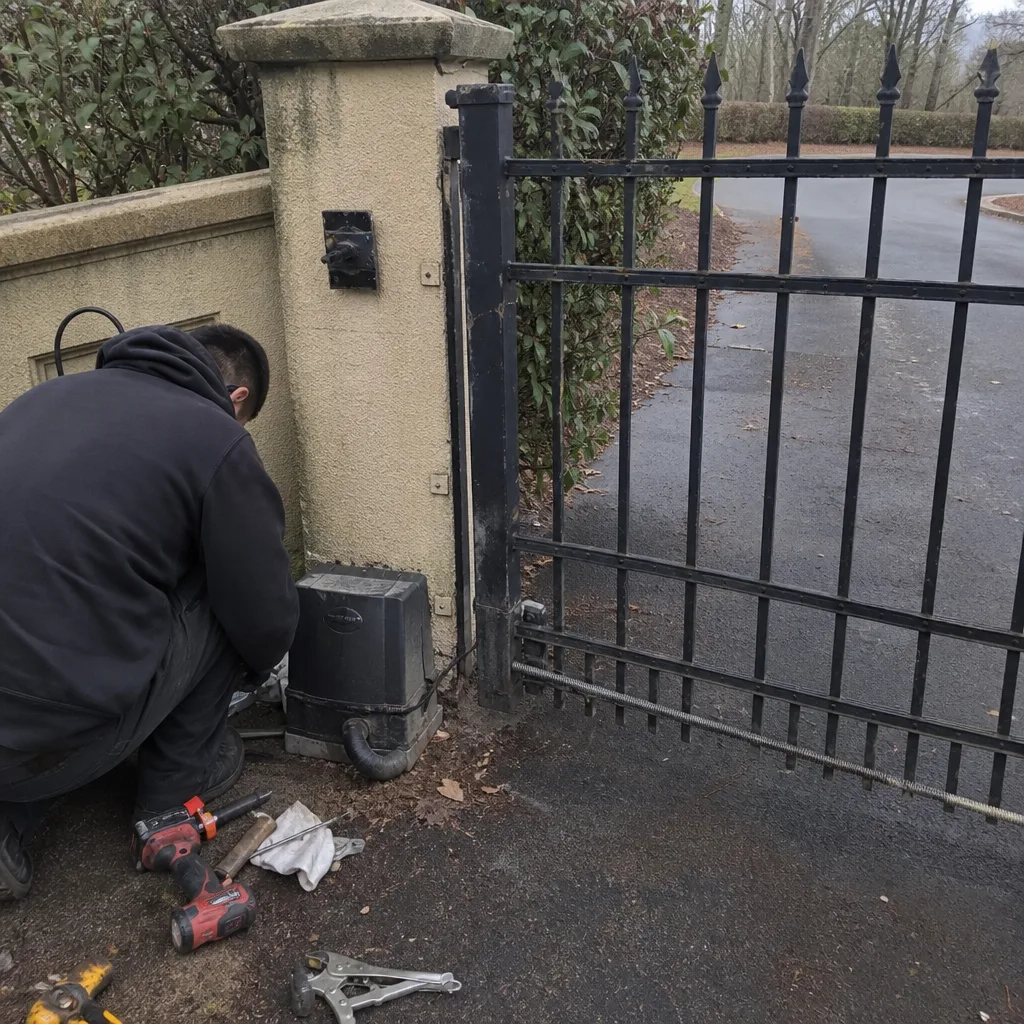 Before
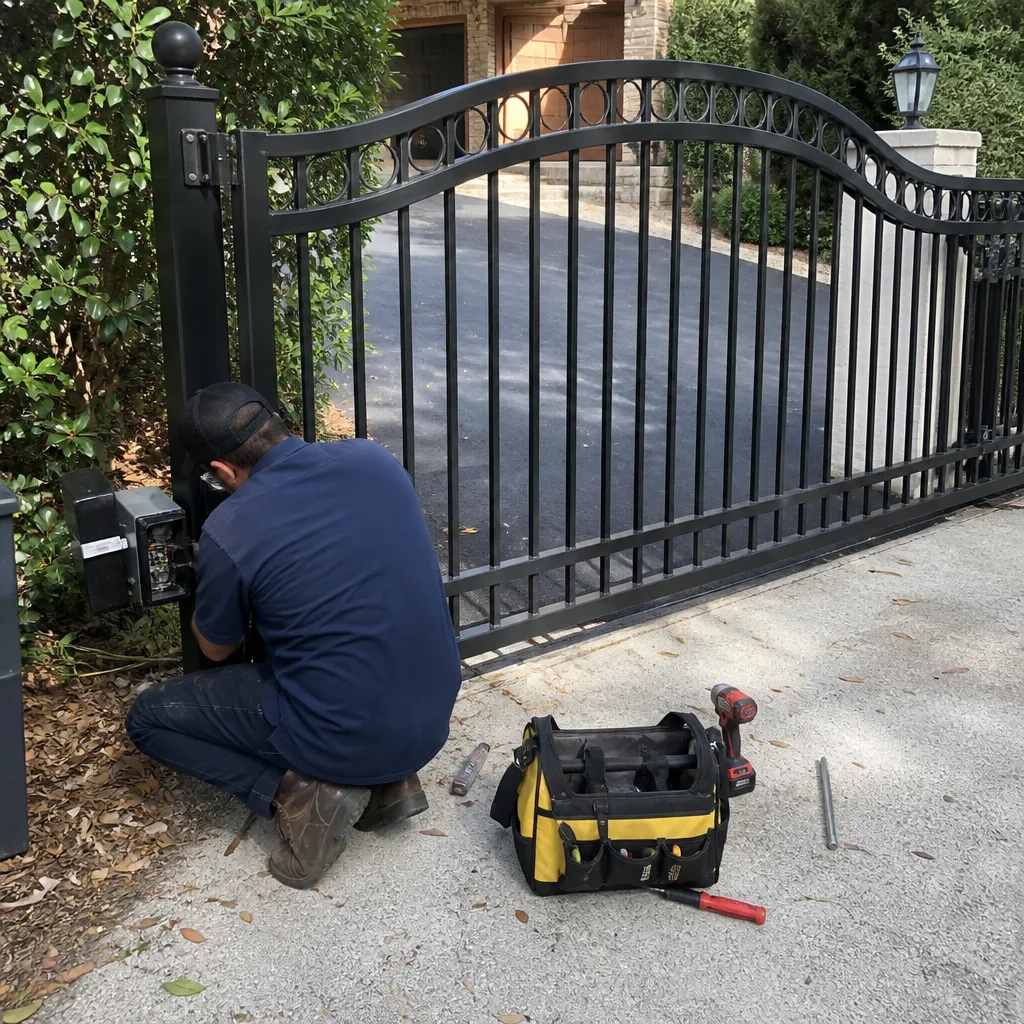 After
After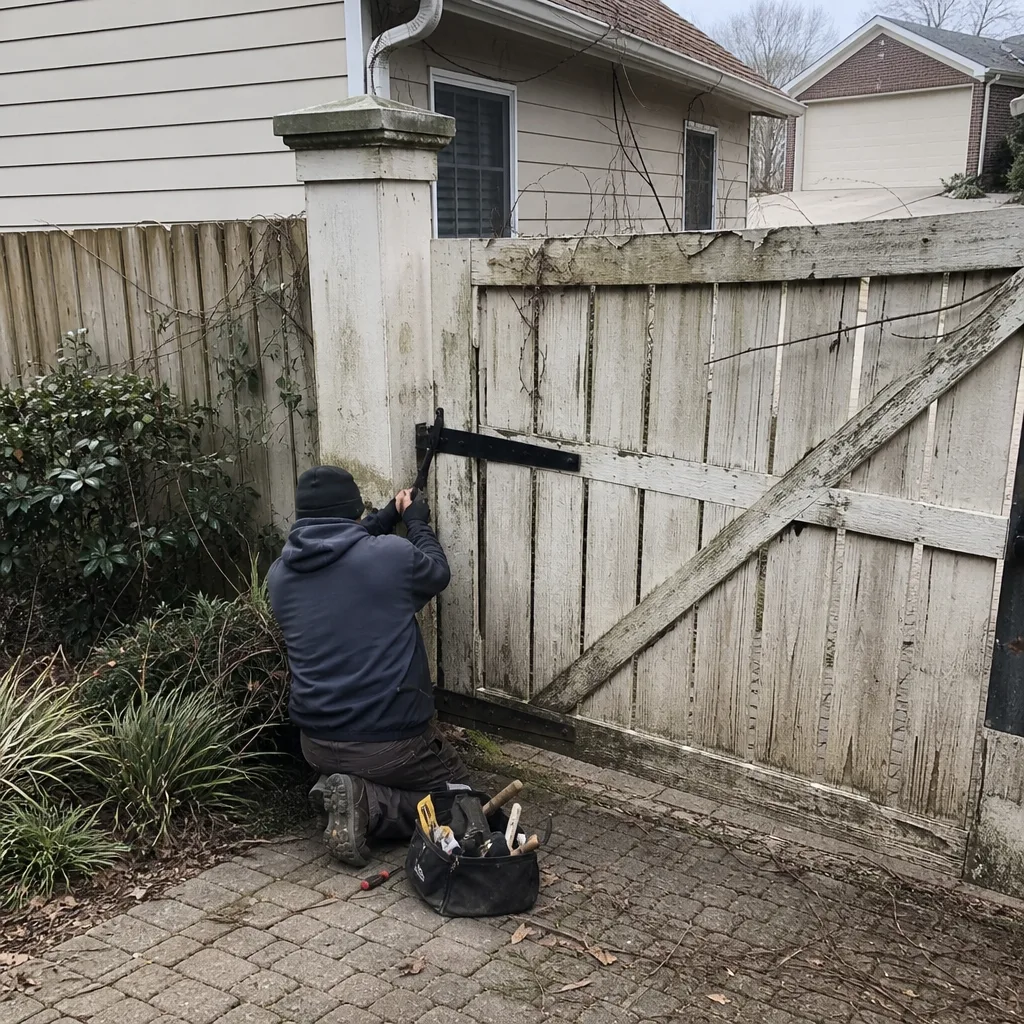 Before
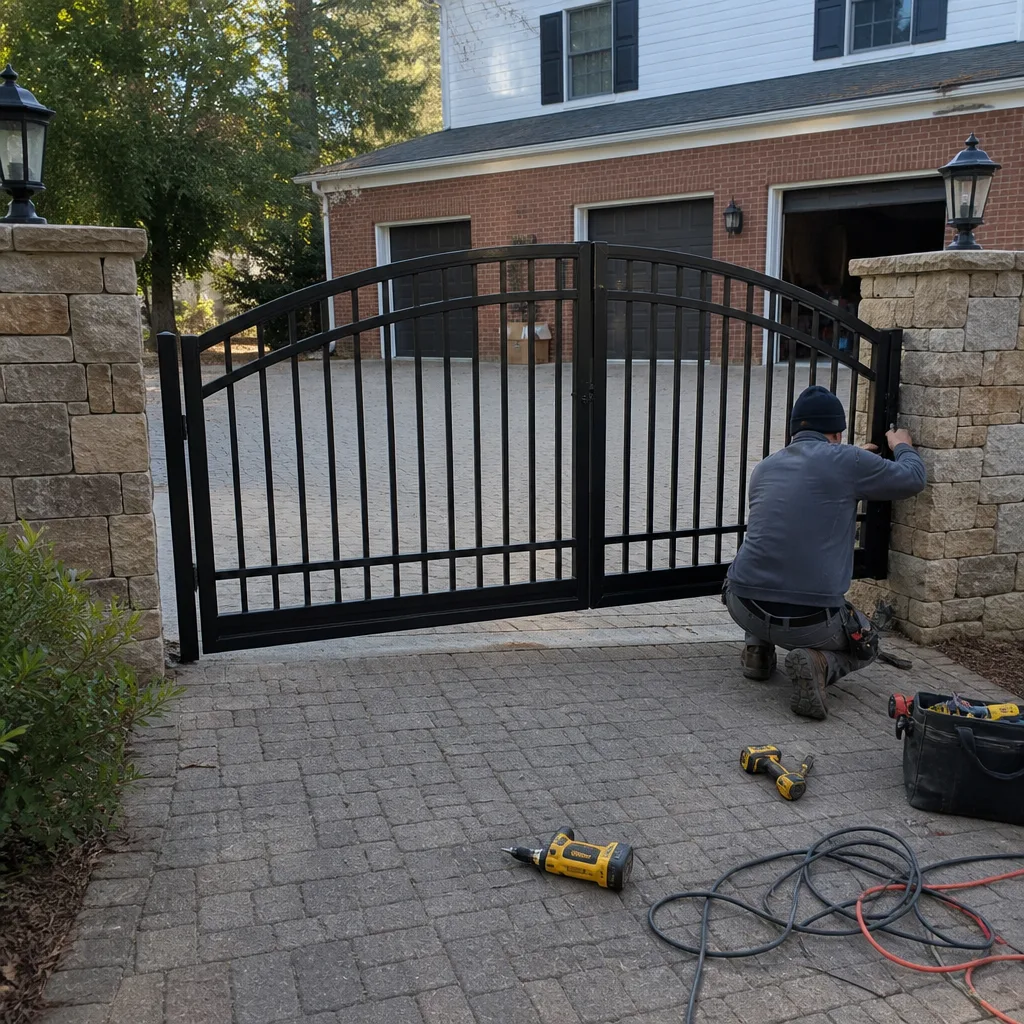 After
After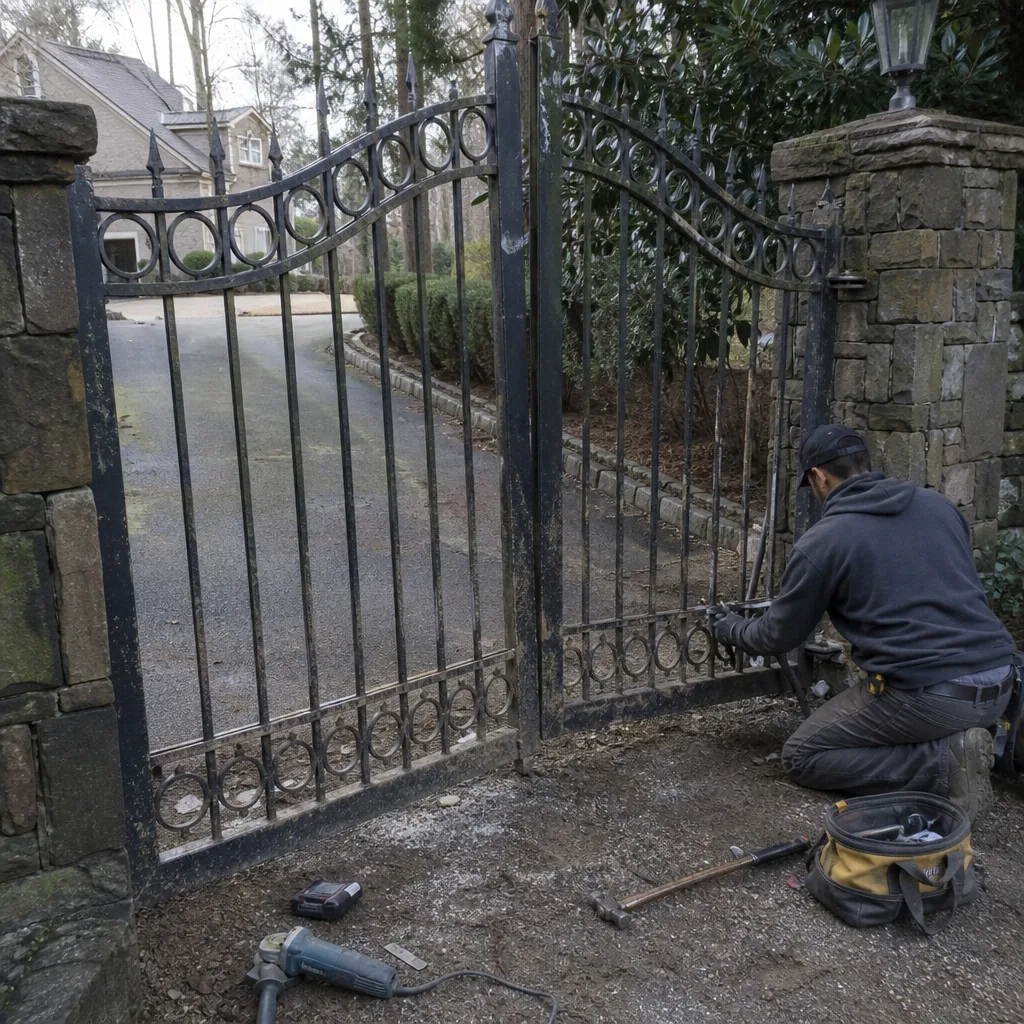 Before
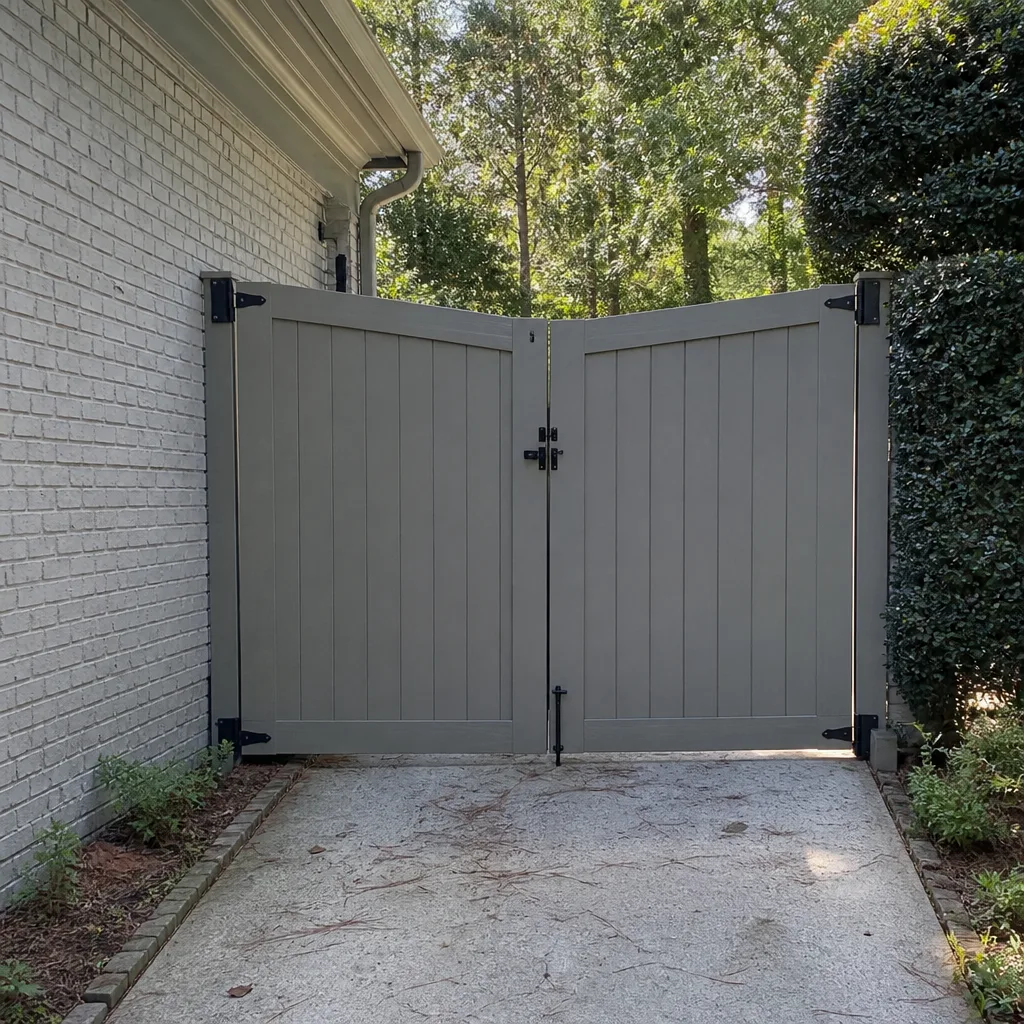 After
AfterHow to Hire a Gate Repair Contractor in Johns Creek: A Step-by-Step Guide
A five-star review cannot tell you whether the technician left a wiring diagram, documented what parts they replaced, or set the limit switches to manufacturer spec. All of those determine what you’ll pay the next time something goes wrong. In Johns Creek, where automated driveway gates are common in subdivisions like St. Ives and Country Club of the South, we’ve seen homeowners pay twice for the same repair because the first contractor fixed the symptom without recording the cause. This guide teaches you to vet our Gate Repair services contractors by the documents they produce, not by their online rating. You’ll learn the four written items to demand before authorizing work, the specific license to verify in Georgia, and how to compare two estimates on identical scope rather than two different verbal descriptions that only look like price differences.
Quick Answer
To hire a gate repair contractor in Johns Creek, request four written documents before authorizing any work: a scope of repair, an itemized parts list with part numbers, a fixed written price, and a post-repair deliverables list. Verify the contractor holds a Georgia low-voltage contractor license for automated gate work, and compare estimates on identical scope by sending the same written description to each bidder. Avoid time-and-materials billing with no cap, and reject any “diagnostic fee applied to repair” clause that incentivizes over-diagnosis.
Table of Contents
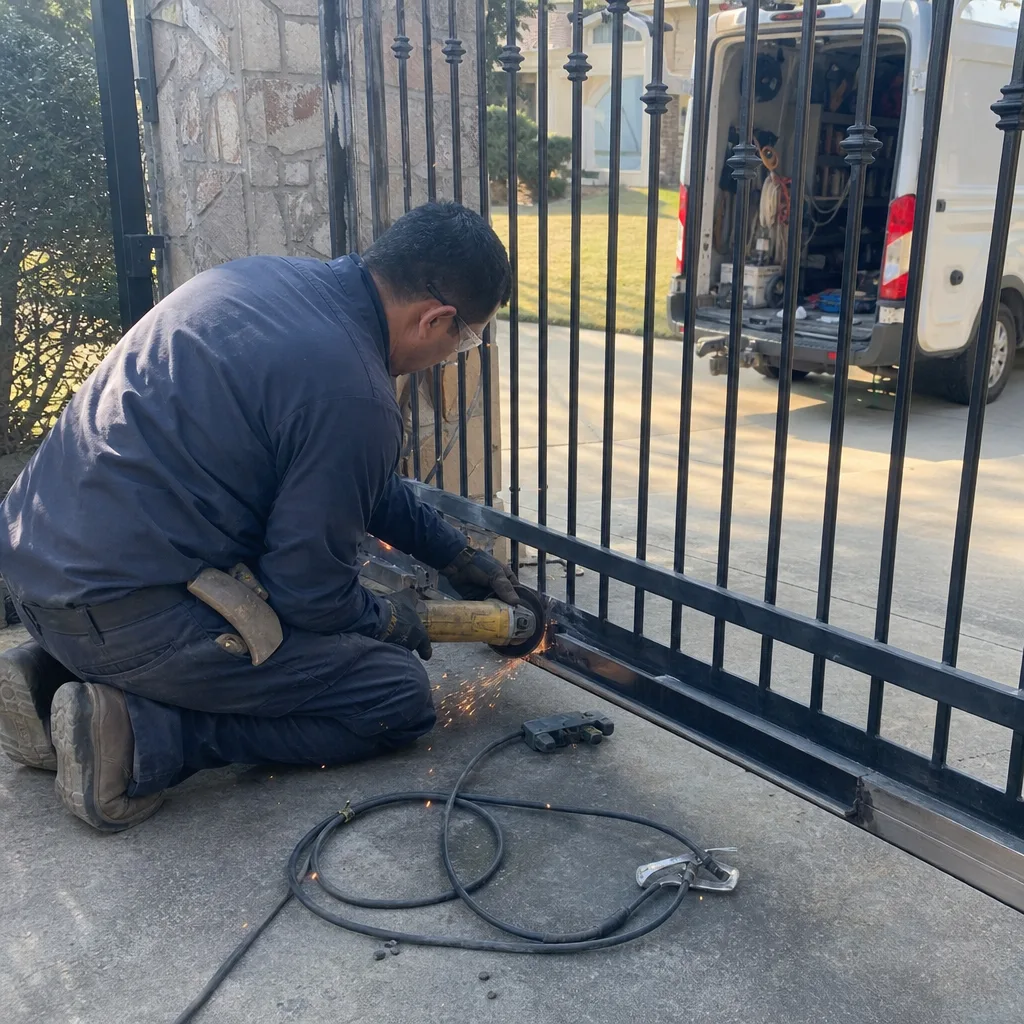
- Why Verbal Estimates Are the Single Biggest Risk
- The Four Written Documents to Demand Before Work Starts
- How to Verify a Georgia Low-Voltage Contractor License
- Questions That Separate Wiring Technicians from Wrench Turners
- Red Flags in Johns Creek Gate Contractor Proposals
- The Comparison Script: How to Get Estimates on Identical Scope
- What Post-Repair Documentation Reveals About Quality
- Common Mistakes to Avoid
- When to Call a Professional
- Frequently Asked Questions
- The Bottom Line
BeforeAfterWhy Verbal Estimates Are the Single Biggest Risk
The most predictive indicator of a bad gate repair experience in Johns Creek is not the contractor’s license status, not their review average, and not how long they’ve been in business. It’s a verbal estimate. A spoken price has no scope attached to it, which means it can expand without accountability, and neither party has a reference document when the gate fails again in six months.
We’ve been called to gates in Johns Creek where a homeowner paid $800 for what was described as “a motor replacement,” only to discover the previous technician never recorded whether the replacement was a LiftMaster, a Mighty Mule, or a no-brand gray-market unit. The motor failed again. The homeowner had no part number, no warranty paperwork, and no recourse. The verbal estimate left no evidence trail.
The climate in Johns Creek accelerates this problem. Humid summers and occasional freeze-thaw cycles in winter stress gate components, especially photo-eyes and limit switches. A contractor who verbally promises to “adjust the gate” without documenting the original limit-switch position or the new setting is leaving you vulnerable to the same failure when humidity swells the wooden gate frame or temperature shifts the metal track. Without written baseline readings, the next technician starts from zero, charges you for rediscovery, and may misdiagnose a recurring issue as a new problem.
The Vance Gate Repair Johns Creek home page explains our Haven Standard, which was built specifically to eliminate this risk. Clause 1 requires a written price before any work starts. Clause 4 requires photographic evidence of what was found and what was set. These are not marketing promises; they are structural features of how we document every job, carried over from Adrian Vance’s commercial access-control work starting in 2014.
A verbal estimate also prevents meaningful comparison shopping. If Contractor A says “around three hundred” and Contractor B says “probably four-fifty,” you are not comparing prices. You are comparing two vague intentions that may describe entirely different scopes of work. One might include replacing the photo-eye; the other might plan to clean it and hope. The price gap looks like a market difference. It’s usually a scope difference hiding inside ambiguous language.
The Four Written Documents to Demand Before Work Starts
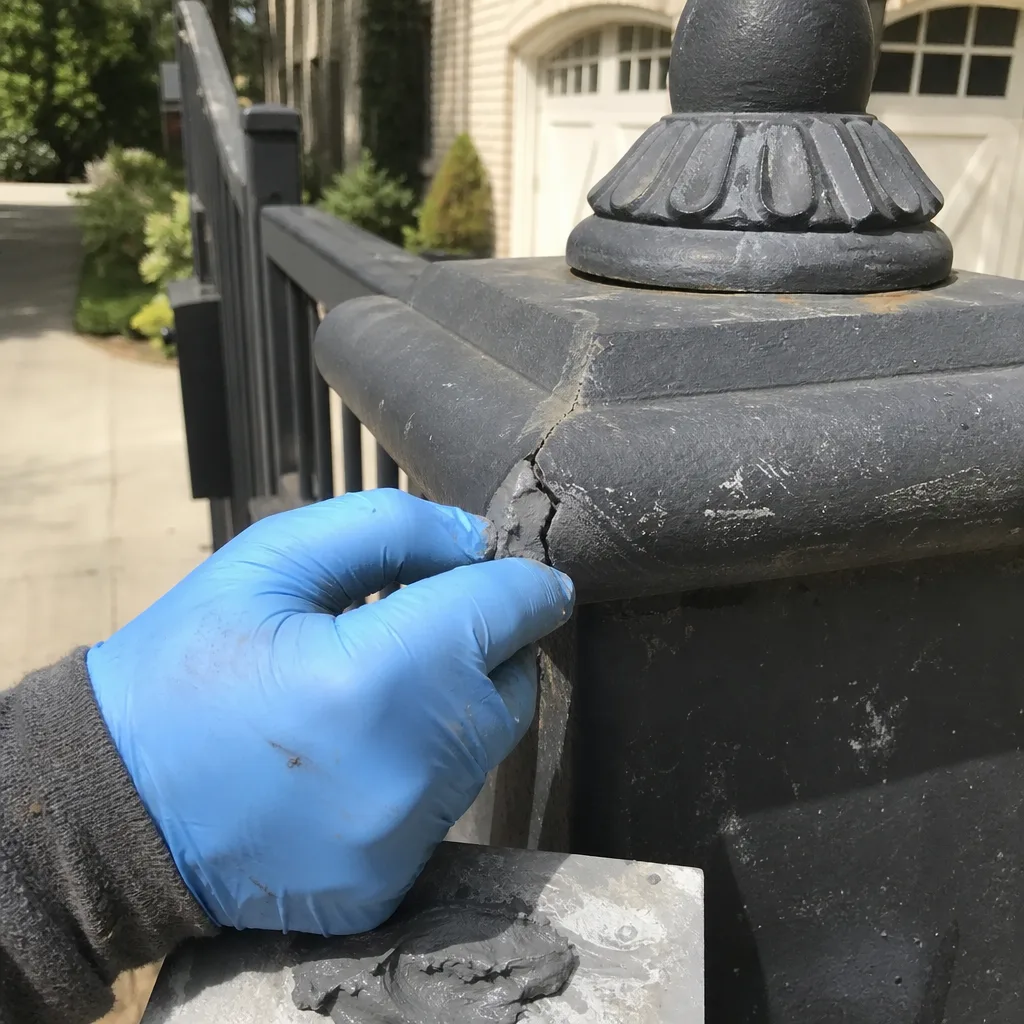
Every gate repair in Johns Creek should begin with paperwork, not a toolbox. Here are the four documents that separate accountable contractors from those who prefer to operate in verbal fog.
1. Scope of Repair
This is a plain-language description of what the technician will do, what they will not do, and what conditions might change the plan. A proper scope for a swing-gate motor replacement reads: “Remove existing Ghost Controls TSS1XP motor and arm bracket. Inspect gate post for rot or looseness. Install replacement motor of equivalent or greater torque rating. Program remote transmitters. Test safety reverse function per UL 325. Document limit-switch settings and leave wiring diagram with homeowner.”
Notice what that scope excludes: it does not promise to replace the gate post if rot is found, because that requires a separate evaluation. It names the brand being removed. It names the safety standard being tested against. A vague scope says “fix the gate motor.” A proper scope names the part, the standard, and the deliverable.
2. Itemized Parts List with Part Numbers
Request specific part numbers, not category descriptions. “New motor” is insufficient. “LiftMaster LA500UL - 24VDC linear actuator, 500 lbs. capacity” is sufficient. Part numbers matter for three reasons: warranty claims, future repairs, and verification that the installed component matches what was quoted. We’ve found gray-market motors installed in Johns Creek gates where the homeowner believed they received a branded unit. The part number on the invoice, had there been one, would have revealed the substitution immediately.
3. Written Price
The price must be a fixed number, not an estimate range, and it must be provided before work begins. Under the Haven Standard, this is Clause 1: “Have it in writing.” The written price should separately list labor, parts, and any trip or diagnostic charge. If the contractor cannot name a fixed price, they have not sufficiently diagnosed the problem or they are structuring the job to bill by time, which transfers all cost risk to you.
For context, most swing-gate motor replacements in Johns Creek run between $1,200 and $2,400, depending on the brand and whether the arm bracket and post hardware are intact. Slide-gate motor replacements typically range from $1,400 to $2,800 due to the chain or rack-and-pinion assembly. These are not quotes; they are market ranges to help you evaluate whether a written price is plausible.
4. Post-Repair Deliverables List
This document states what you receive when the technician leaves: photos of the work area before and after, a wiring diagram or marked-up existing diagram, the programmed remote codes or access credentials, warranty paperwork with the contractor’s and manufacturer’s terms, and any recommended future maintenance with timeline. A contractor who cannot describe their deliverables in advance is unlikely to produce them consistently.
At Gate Repair in Johns Creek, every visit under the Haven Standard includes a documented photo record at no additional charge. The homeowner receives a copy; the job file retains a copy. This is not an extra service. It is the minimum acceptable documentation for any gate repair that involves electrical or automated components.
How to Verify a Georgia Low-Voltage Contractor License
Georgia requires a low-voltage contractor license for work on automated gate operators and access-control systems. This is separate from a general contractor license and separate from an electrical contractor license. Many gate repair companies in Johns Creek hold only a general contractor classification, which legally covers the mechanical gate but not the low-voltage wiring, control boards, or safety devices.
Here’s how to verify the license:
- Visit the Georgia Secretary of State’s Professional Licensing page and search the “Low Voltage Contractor” category.
- Confirm the license status is “Active” and check the expiration date.
- Note the license classification: “Low Voltage” specifically, not “General Contractor” or “Electrical Contractor” alone.
- Cross-reference the business name on the license with the name on your estimate. Some contractors operate under DBA names that do not match their licensed entity.
Why this matters for automated gates: a gate operator is a low-voltage device that controls high-voltage or high-torque mechanical action. The safety systems - photo-eyes, edge sensors, loop detectors - are all low-voltage circuits. A technician without low-voltage licensing may understand how to bolt a motor to a post without understanding how to diagnose a failed safety circuit or why the control board is throwing a fault code. In Johns Creek, where many gates serve homes with children and pets, a miswired safety reverse can cause injury.
We are state-licensed as a low-voltage contractor, and our license number appears on every estimate and invoice. We do not consider this a credential to boast about. It is a minimum legal and technical qualification for the work we perform, and we expect homeowners to verify it.
Questions That Separate Wiring Technicians from Wrench Turners
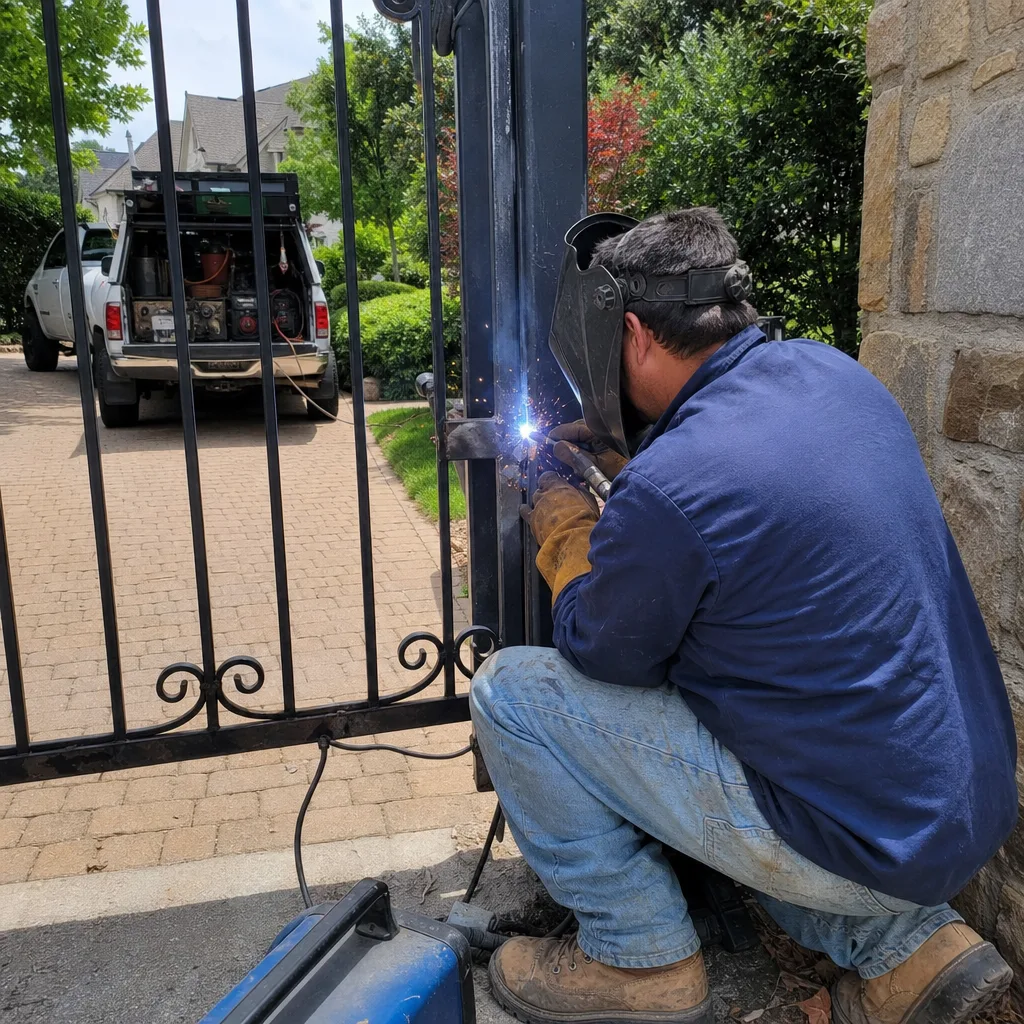
Automated gate repair requires two distinct skill sets: mechanical troubleshooting (hinges, wheels, tracks, posts) and low-voltage control-system diagnosis (wiring, boards, sensors, programming). Many contractors excel at one and merely tolerate the other. The following questions reveal which expertise dominates their practice.
- “How do you test a photo-eye circuit for voltage drop under load?” A technician who understands access control will describe connecting a multimeter in series with the photo-eye receiver, activating the gate to close, and observing whether voltage sags below the receiver’s minimum threshold when the motor draws current. A wrench-turner will say they “check if the light is on” or “clean the lenses.”
- “What resistance reading indicates a failed edge sensor on a DoorKing system?” The correct answer is approximately 10,000 ohms (10K) for a normally-closed circuit on most DoorKing edge configurations. A significant deviation indicates a break or short. A technician who cannot name this value has not worked deeply with automated safety systems.
- “How do you verify limit-switch setting accuracy after adjustment?” The proper answer involves measuring the gate’s physical travel against the operator’s programmed open and close positions, typically with the control board in manual mode, and recording the degree or inch measurement. A vague answer about “running it a few times” suggests imprecision that leads to premature mechanical wear.
- “What is the UL 325 requirement for entrapment protection on a residential slide gate?” The answer: two independent entrapment protection devices (typically a photo-eye and an edge sensor, or two edge sensors on opposing sides), both tested for functional response to obstruction. A contractor who cannot cite UL 325 or who dismisses it as “just a code thing” is not current on safety standards.
These questions are not academic. In Johns Creek, we’ve encountered gates where a previous technician replaced a perfectly good motor when the actual failure was a corroded wire nut in the photo-eye circuit - a $12 part and 20 minutes of diagnosis. The homeowner paid for a motor they didn’t need because the contractor’s skill set stopped at mechanical replacement.
At Gate Motor & Opener in Johns Creek, we service nine major automation brands including Ghost Controls, DoorKing, and Elite. This breadth matters because we diagnose the system that’s installed rather than steering every customer toward a replacement with whatever brand we happen to stock.
Red Flags in Johns Creek Gate Contractor Proposals
Certain proposal structures predict bad outcomes with high reliability. Watch for these specific patterns:
Time-and-materials billing with no cap. A proposal that states “$95 per hour plus parts, estimated 2-4 hours” transfers all cost risk to you. If the technician is slow, inexperienced, or discovers an unexpected complication, your invoice grows without bound. A fixed written price with a defined scope is the only structure that aligns the contractor’s incentives with your interests.
“Diagnostic fee applied to repair” clauses. This language appears customer-friendly - pay $150 for diagnosis, and it’s credited if you proceed with the repair - but it creates a powerful incentive for the contractor to find something worth repairing. The diagnostic fee is only “applied” if you authorize additional work, which means the technician profits from identifying a problem, any problem, real or inflated. We offer a free second opinion on any written estimate from another company specifically to counter this dynamic. Bring the paperwork and we’ll review it at no cost.
Vague brand references on parts. “Replacement motor, comparable to original” is a red flag. It permits substitution with a lower-quality unit without your knowledge. Demand the manufacturer and model number in writing before work begins.
No mention of safety-device testing. Any gate repair involving an automated operator must include functional testing of all safety devices - photo-eyes, edge sensors, loop detectors - and documentation of that testing. A proposal that describes mechanical repair without mentioning safety verification is incomplete and potentially dangerous.
Pressure to decide immediately. A contractor who claims a discount expires today, or who suggests the gate is unsafe to leave unrepaired overnight without specific evidence, is using urgency to bypass your due diligence. In Johns Creek, same-day emergency service is available from multiple providers, including ours. You have time to compare written scopes.
The Comparison Script: How to Get Estimates on Identical Scope
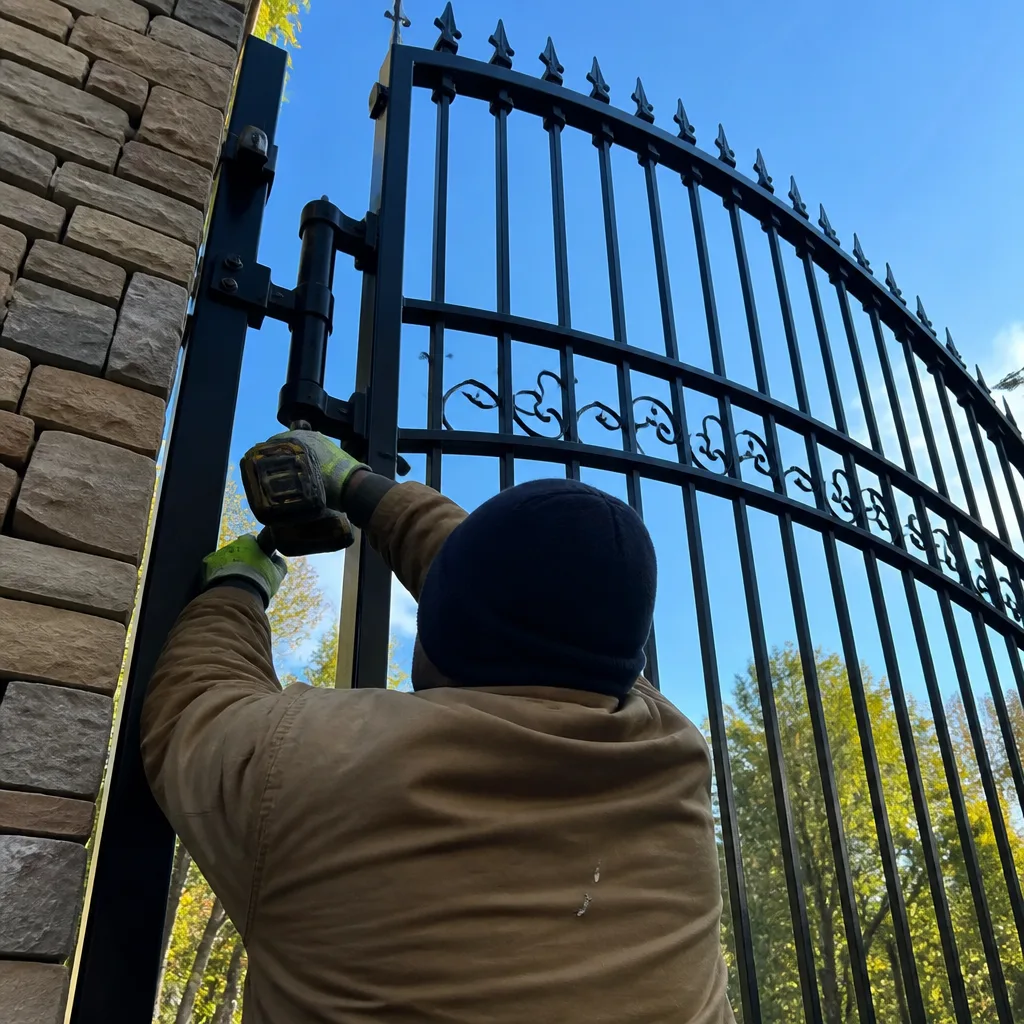
The most common error in comparing gate repair estimates is comparing two verbal descriptions that sound similar but describe different work. The solution is to write the scope yourself and send identical language to each contractor.
Here’s the script:
- Diagnose the problem to the best of your ability. Note the symptoms: gate reverses before closing, motor hums but gate does not move, remote works intermittently, etc.
- Write a single paragraph describing the symptom, the gate type (swing or slide), the operator brand and model if visible, and any recent work performed.
- Request a fixed written price for diagnosis and repair, with the following specific deliverables: itemized parts list with part numbers, written scope of repair, photographic documentation of work performed, and testing of all safety devices with results recorded.
- Send identical text to three contractors. Do not allow any contractor to rewrite your scope verbally.
- Compare the responses on four criteria: fixed price versus estimate range, specificity of parts listed, inclusion of safety-device testing, and description of post-repair documentation.
Example scope text you might send: “Swing driveway gate, Elite CSW200 operator installed 2019. Gate reverses approximately 18 inches before fully closing. Photo-eye lenses are clean and aligned. No visible damage to gate arm or hinges. Request fixed written price to diagnose and repair, including replacement of any failed components with named brand and model, testing of all safety devices per UL 325, and written documentation of settings and adjustments.”
This approach eliminates the apples-to-oranges comparison problem. When Contractor A quotes $650 and Contractor B quotes $1,100, you’ll know whether the difference is labor rate, parts quality, or scope inclusion. Without identical scope language, a lower price often means omitted work - no safety testing, no documentation, no warranty paperwork - that you’ll pay for later.
For new gate projects rather than repairs, the same principle applies. At Gate Installation in Johns Creek, we provide a written scope and fixed price for every installation, including the power run, safety edges, and access-control integration, so homeowners can compare our proposal against others on identical terms.
What Post-Repair Documentation Reveals About Quality
The documents you receive after the repair are as important as the estimate you approved before it. They determine whether the next technician can diagnose efficiently and whether you can enforce a warranty claim.
A complete post-repair file from a quality contractor in Johns Creek should include:
- Photographs of the work area showing the operator mounting, wiring connections, and any replaced components. These establish baseline condition for future failure analysis.
- Limit-switch settings or position readings recorded in degrees or inches from a defined reference point. When a gate in St. Ives begins reversing prematurely six months after repair, the original setting documentation reveals whether the problem is a shifted setting or a new mechanical issue.
- Wiring diagram or marked-up existing diagram showing any circuit modifications. This is especially critical for access-control integrations where low-voltage wiring may have been rerouted.
- Part numbers and serial numbers of installed components, with manufacturer warranty terms and the contractor’s labor warranty terms separately stated.
- Safety-device test results with date, technician name, and functional description: “Photo-eye interruption at 18 inches from closed position caused immediate reversal. Edge sensor compression at 15 lbs. force caused immediate reversal.”
Under the Haven Standard, every Vance Gate Repair visit includes this documentation at no additional charge. Explore more guides & resources on our blog. The homeowner receives a physical or digital copy; our job file retains the original. This practice originated in Adrian Vance’s commercial access-control work, where undocumented wiring changes could cost a facility thousands in rediscovery labor. We applied the same discipline to residential gates because the cost of rediscovery is borne by the homeowner, not an institutional maintenance budget.
A contractor who resists providing documentation, who claims “we don’t usually do that,” or who offers only a one-line invoice reading “repaired gate - $475,” is asking you to trust their memory for all future interactions with that gate. In our experience, technician turnover at local gate companies is high. The person who returns for warranty work may never have seen your gate before. Without documentation, they start from ignorance and bill you for education.
Common Mistakes to Avoid
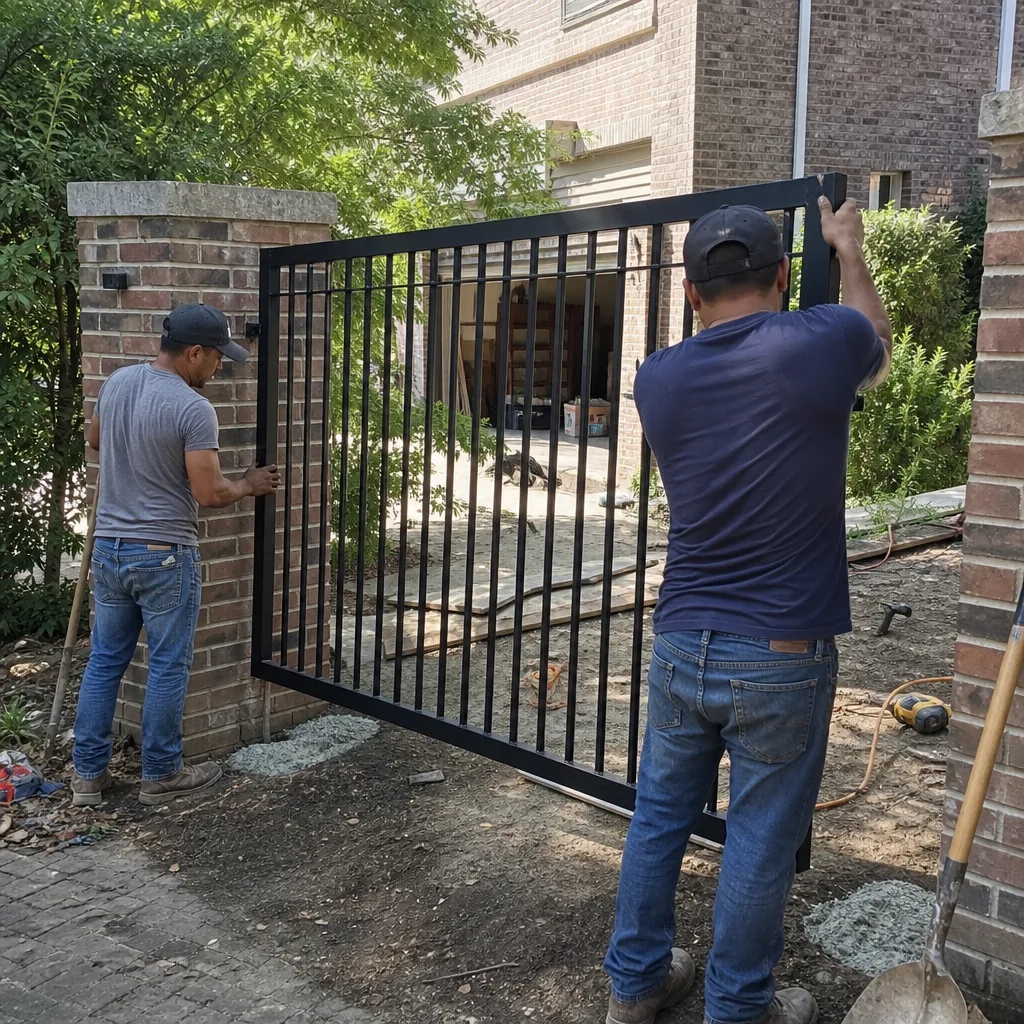
- Assuming a general contractor license covers automated gate work. In Georgia, low-voltage systems require separate licensing. Verify the specific classification or risk hiring someone legally unqualified for the electrical portion of the job.
- Accepting “the part is on order” without a written backorder plan. A common delay tactic in Johns Creek, especially for less common brands like certain Elite or Ghost Controls models. Insist on a written timeline with a cancellation option if parts do not arrive.
- Neglecting to test safety devices yourself before the technician leaves. Walk through the photo-eye beam during closing. Press the edge sensor. The technician should demonstrate each function and explain the expected response.
- Paying in full before documentation is delivered. The final payment should be contingent on receiving the complete post-repair file: photos, settings, part numbers, warranty paperwork.
- Comparing estimates with different scopes and calling it price shopping. This is the most expensive mistake. Use the comparison script above to ensure you’re evaluating identical work.
- Ignoring neighborhood-specific gate issues. In Johns Creek’s older sections near the Chattahoochee River, wooden gate posts rot faster due to higher water tables. A contractor who does not inspect post integrity during a motor replacement is setting up a repeat failure.
When to Call a Professional
Call a gate repair contractor when the gate exhibits any of the following: reversed travel without obstruction, grinding or binding in the mechanical drive, intermittent response to remote or keypad commands, visible damage to hinges wheels or track, or any automated gate that fails to reverse when safety devices are triggered during testing. These conditions indicate either mechanical wear or control-system faults that require diagnostic equipment and trade knowledge.
Do not attempt to adjust high-tension spring-assisted hinges or torsion-spring counterbalance systems yourself. These components store significant mechanical energy and can cause serious injury if released improperly. Similarly, do not open control enclosures or attempt to bypass safety circuits. UL 325 safety requirements exist because bypassed or miswired safety devices have caused entrapment injuries and fatalities.
Vance Gate Repair Johns Creek offers free estimates in Johns Creek - call (678) 394-1765. A live person answers 24 hours a day, seven days a week. We’ll review your symptoms, explain what documentation you’ll receive, and provide a fixed written price before any work begins. If you have an estimate from another company, bring it for a free second opinion under our Haven Standard review process.
Frequently Asked Questions
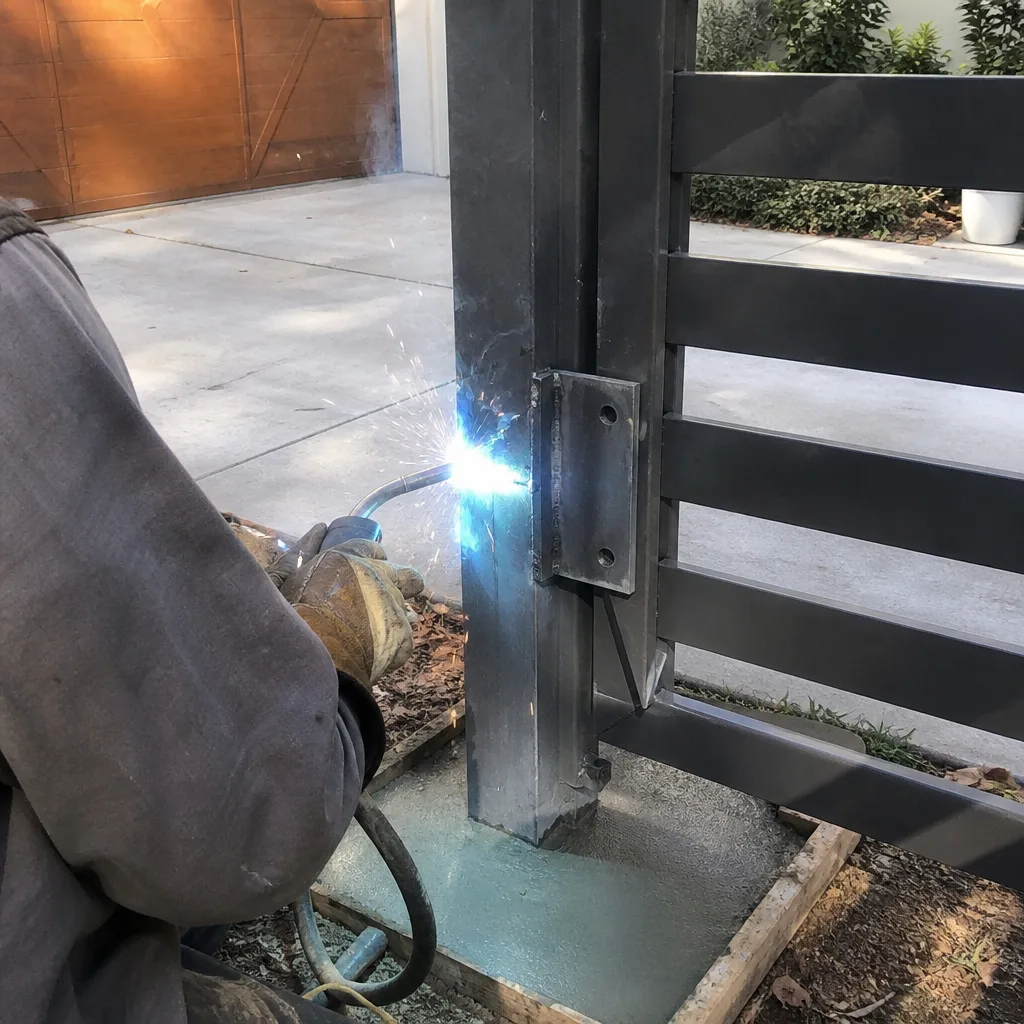
Most gate repairs in Johns Creek range from $180 to $650 for mechanical issues like hinge replacement, wheel adjustment, or track realignment. Automated gate motor repairs typically run $280 to $580 for control board or limit-switch work. Full motor replacements generally cost $1,200 to $2,400 for swing gates and $1,400 to $2,800 for slide gates, depending on brand and whether mounting hardware must be replaced. Call (678) 394-1765 for an exact quote - estimates are free and the price is fixed in writing before work starts.
You can perform basic maintenance like cleaning photo-eye lenses, lubricating hinges with a silicone-based product, and clearing track debris. Do not attempt to repair or adjust high-tension springs, control board wiring, or safety device circuits yourself. These components pose genuine injury risks and their improper function can create liability exposure. A trained professional should handle any repair that involves stored mechanical energy or low-voltage safety circuits.
Verify a “Low Voltage Contractor” license through the Georgia Secretary of State’s professional licensing database. General contractor or electrical contractor licenses alone do not legally cover automated gate operator installation or repair. The license status should be “Active” and the business name should match your estimate. Ask for the license number if it is not printed on proposal documents.
A proper estimate includes four elements: a specific scope of repair describing what will and will not be done, an itemized parts list with manufacturer and model numbers, a fixed total price with labor and materials separately listed, and a description of post-repair deliverables including documentation and warranty terms. Any estimate missing one of these elements is incomplete and exposes you to cost expansion or disputed scope.
The most common causes are misaligned photo-eyes, sensitivity settings set too high for the gate’s current mechanical resistance, or a failing edge sensor sending intermittent obstruction signals. In Johns Creek’s humid climate, corrosion at wire connection points can also cause voltage fluctuations that mimic safety-device triggers. A technician with low-voltage diagnostic skill can distinguish between these causes in 15-20 minutes with proper test equipment, avoiding unnecessary parts replacement.
A quality residential gate motor typically lasts 10-15 years with proper maintenance, though Johns Creek’s climate conditions can shorten this. Humidity accelerates control board corrosion, and temperature cycling stresses mechanical components. Motors installed without adequate weatherproofing or surge protection fail earlier. Documented annual maintenance, including limit-switch verification and safety-device testing, extends motor life significantly by catching minor issues before they cascade into major failures.
The Bottom Line
The contractor you hire in Johns Creek should be evaluated by the documents they produce, not by their review count or years in business. Demand a written scope, itemized parts with part numbers, a fixed price before work starts, and a defined set of post-repair deliverables. Verify low-voltage licensing for any automated gate work. Use the comparison script to get estimates on identical scope. And never pay in full until you hold complete documentation of what was found, what was set, and what was installed. These practices filter out verbal-estimate operators and leave you with a gate repair record that protects your investment for years.
Written by Adrian Vance, Owner at Vance Gate Repair Johns Creek, serving Johns Creek since 2014.