
Last updated September 22, 2026
Free on-site gate assessment - hinges, posts, and your LiftMaster or Nice gate operator checked before anything is quoted
The assessment is free and the quote is the invoice.

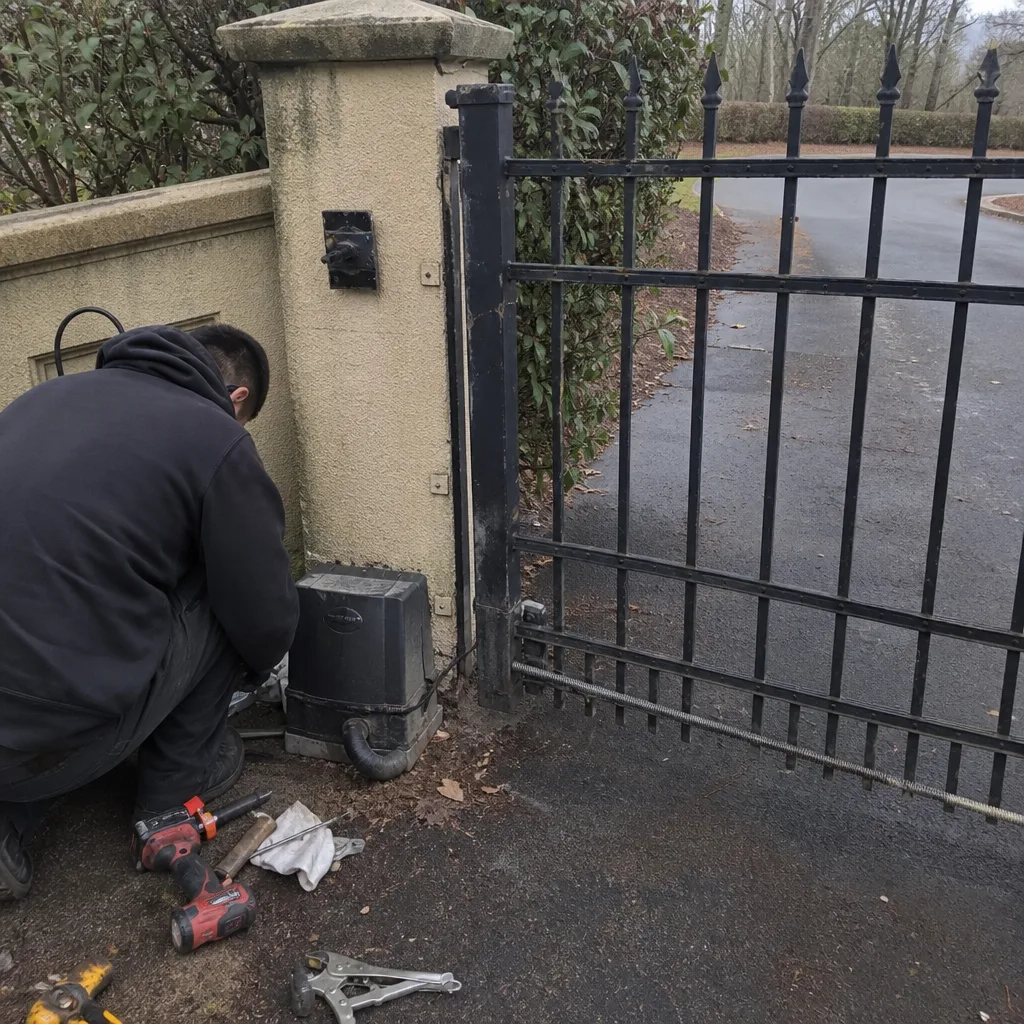 Before
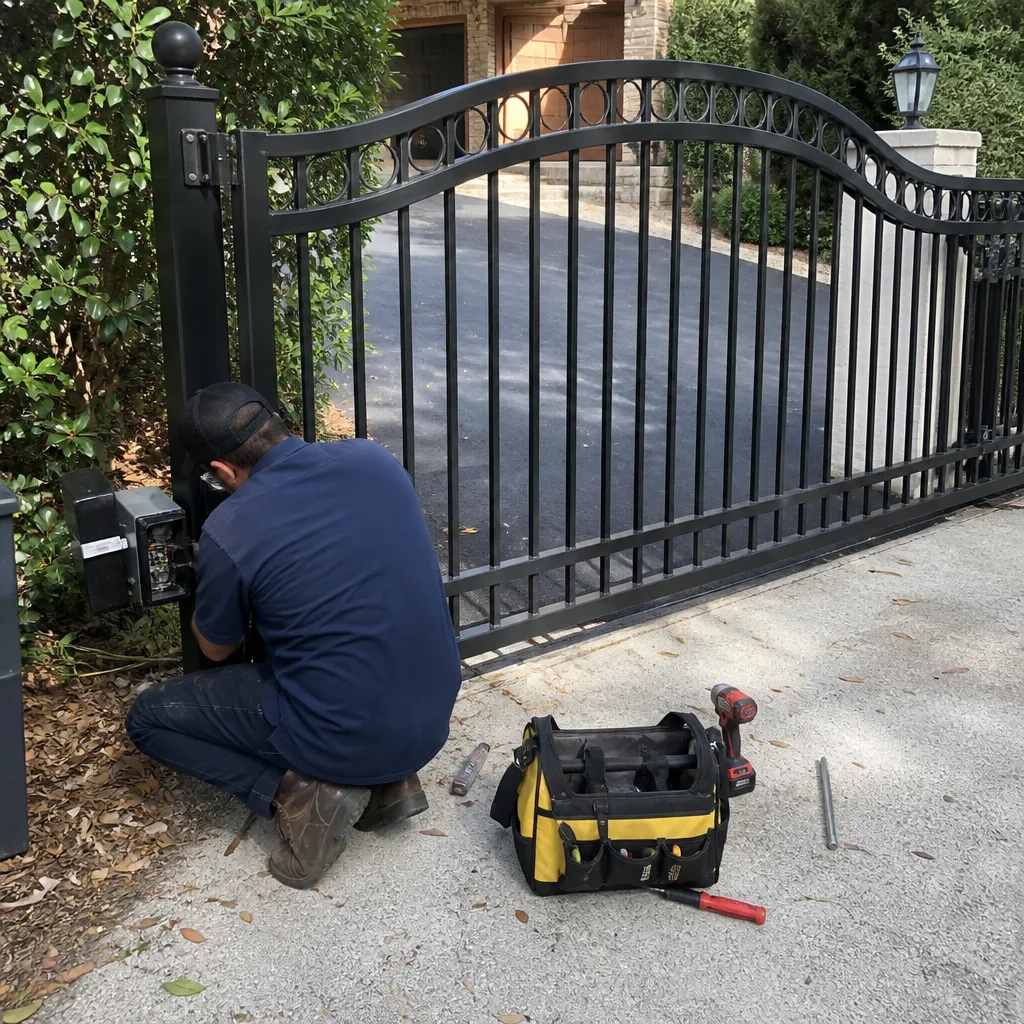 After
After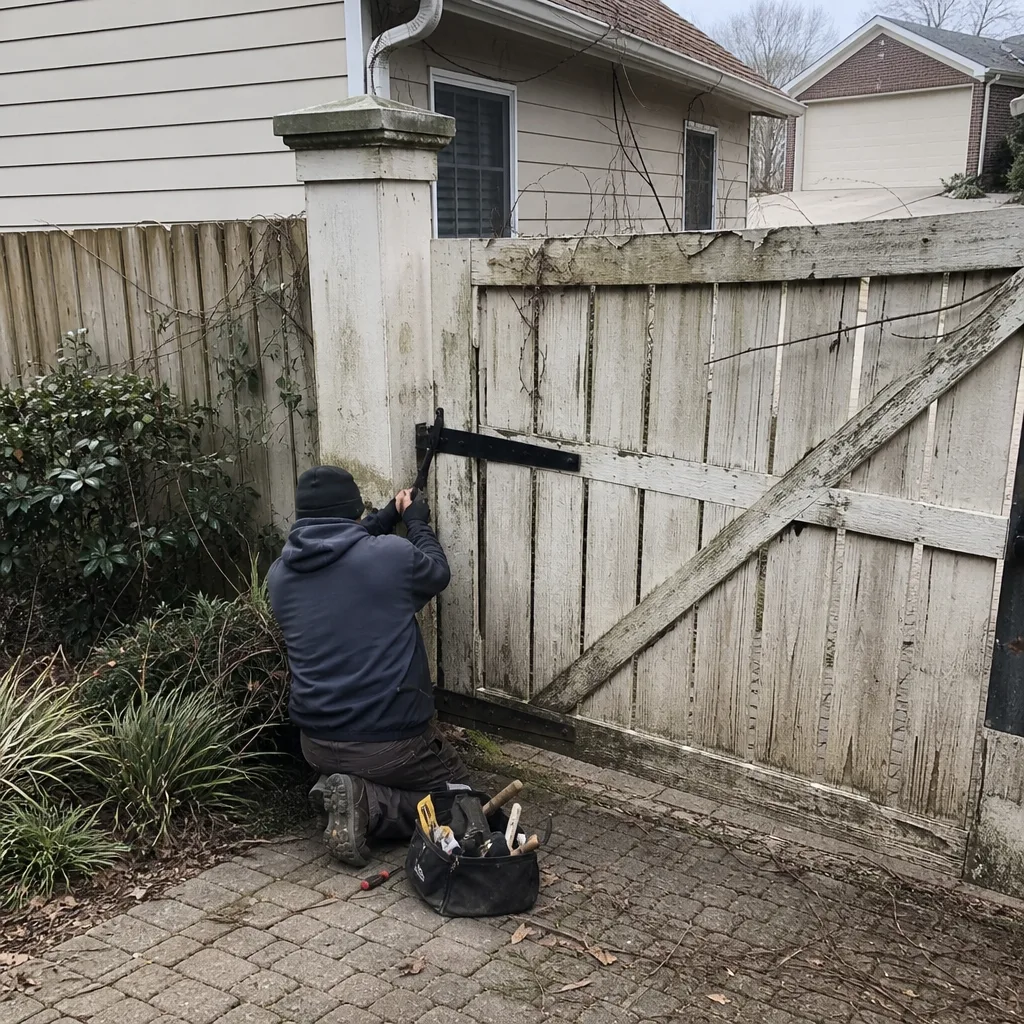 Before
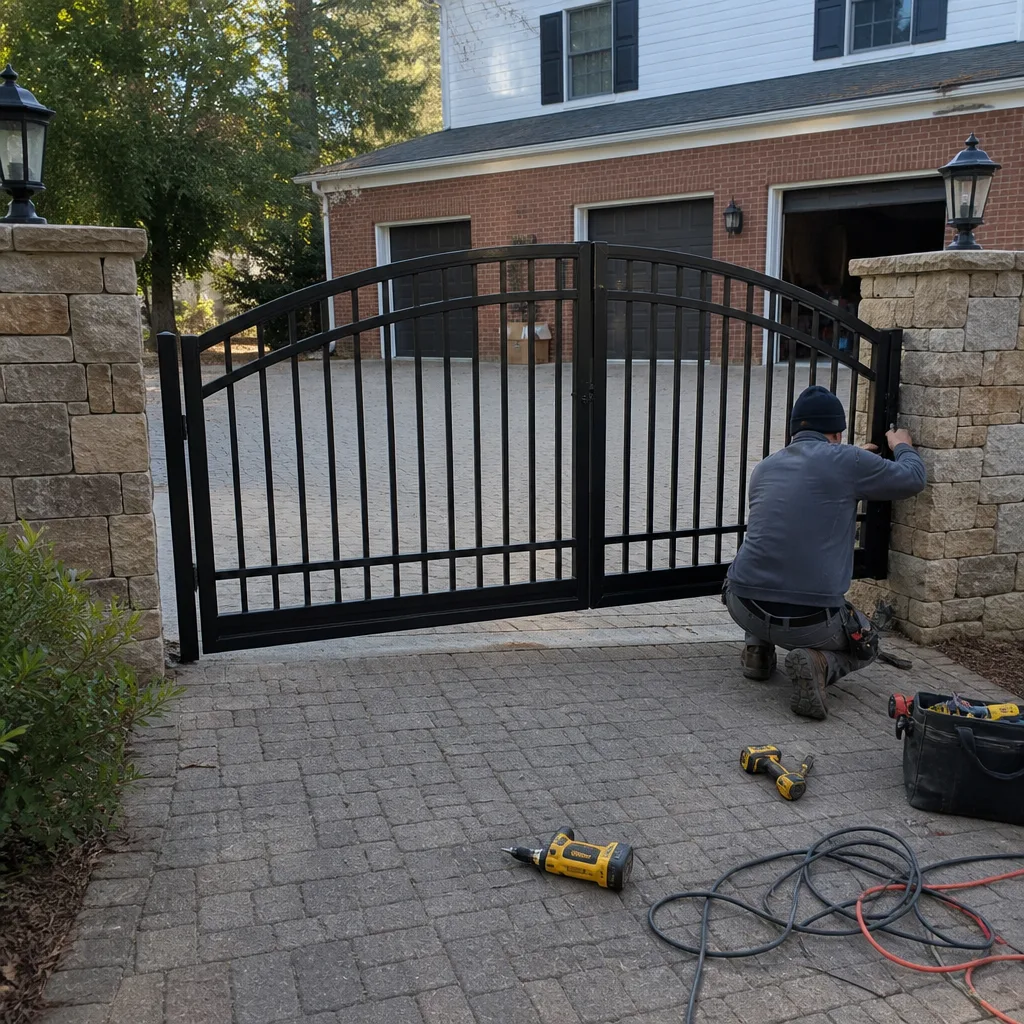 After
After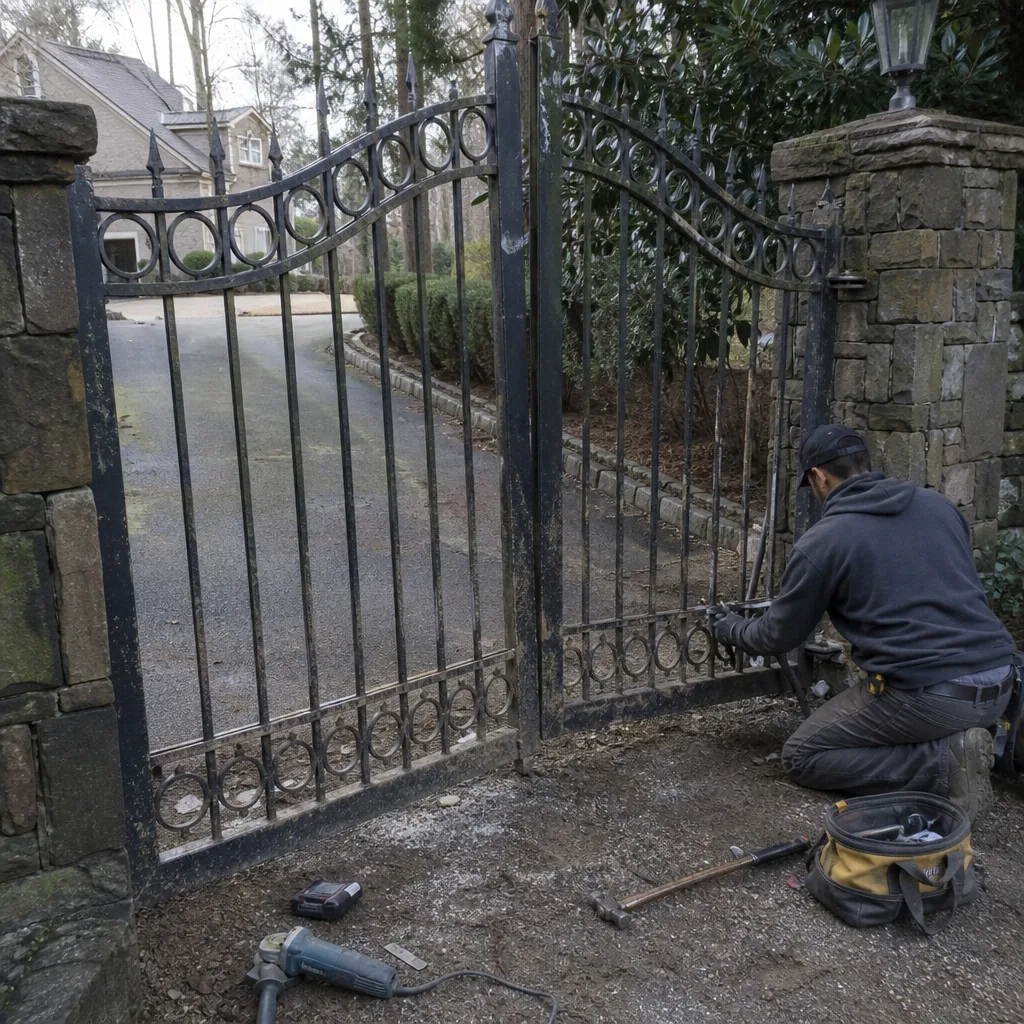 Before
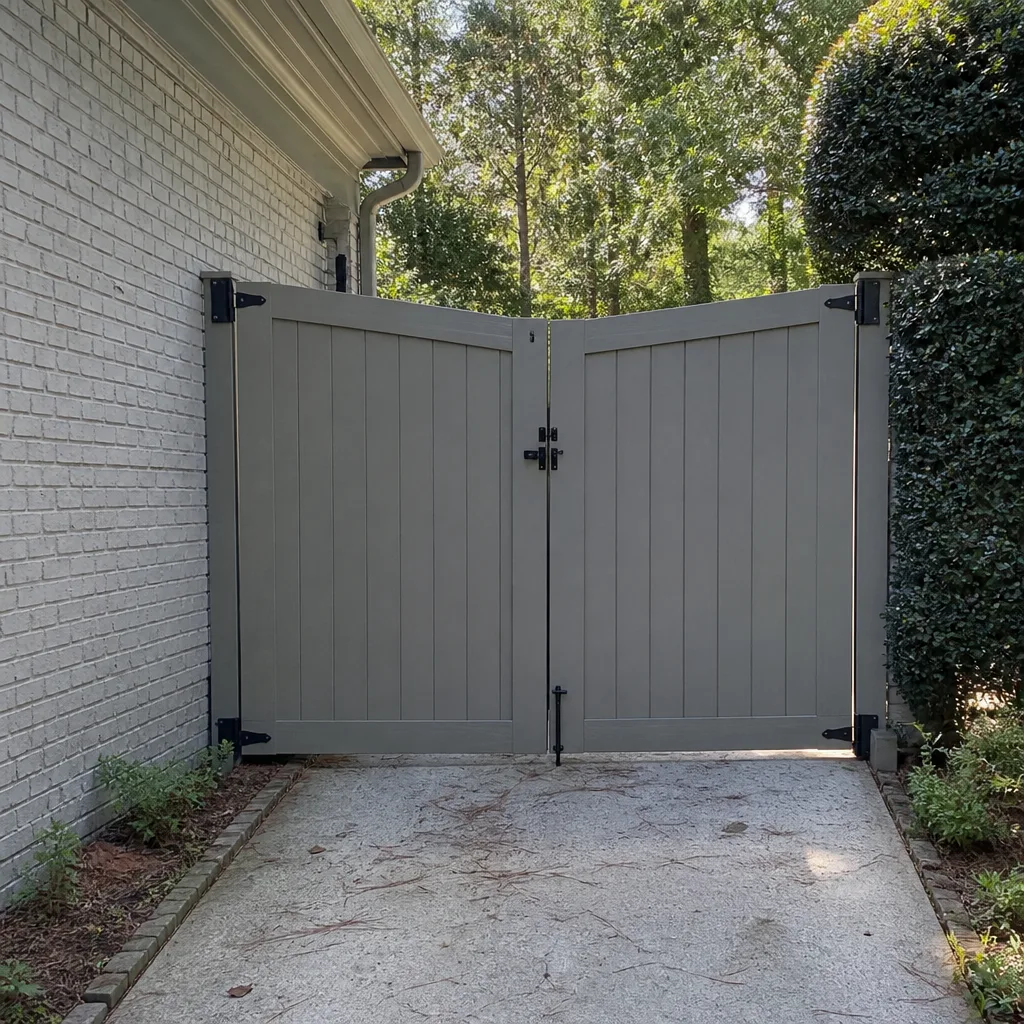 After
AfterSeasonal Gate Repair Care for Johns Creek: Year-Round Homeowner’s Guide
Most seasonal gate guides tell you to “winterize” - a term that makes sense in Minnesota and almost none in Johns Creek, where the real winter risk is one or two hard freezes causing post heave, not sustained freeze damage to mechanical parts. After 22,000 gates repaired and installed since 2014, we’ve learned that Johns Creek’s climate runs on two damaging seasons with two narrow gate repair windows in between. Get the timing wrong, and you’re replacing a $400 control board in July that a $90 spring inspection would have caught in March. This guide maps Johns Creek’s actual weather patterns to the specific failures they cause, and gives you a year-over-year log template to spot problems before they become emergencies.
Quick Answer
Johns Creek gate owners should schedule preventive inspections in mid-October and mid-March - the two transition windows between our damaging summer heat season and our clay-soil winter heave season. Summer failures typically involve capacitor and control board heat damage in enclosed operators; winter failures involve post shifting and hinge misalignment from freeze-thaw cycles in Georgia’s expansive clay. A biannual inspection measuring post plumb, hinge wear, and operator internal temperature prevents 70% of the emergency calls we receive in peak season.
Table of Contents
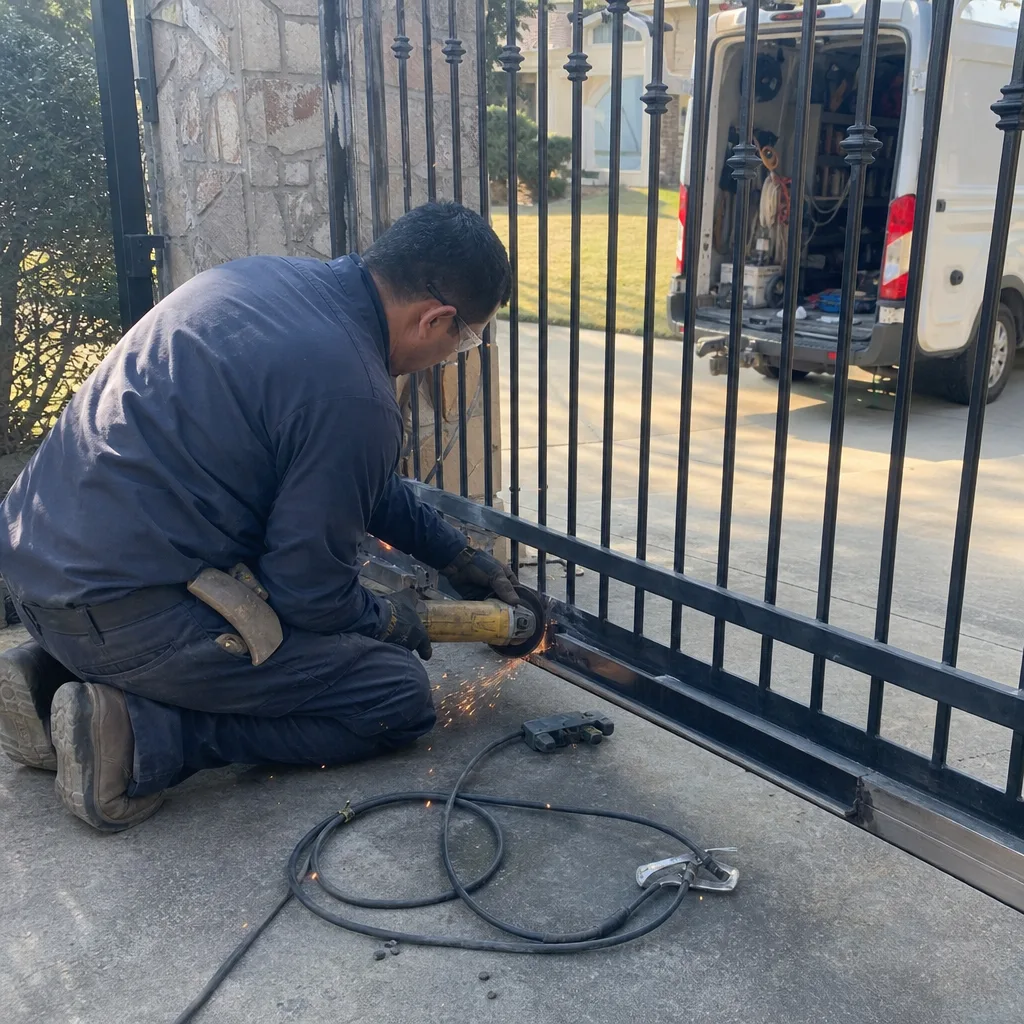
- The Two Johns Creek Damage Seasons
- The October Service Window: Preparing for Winter Heave
- The March Service Window: Recovering from Freeze Cycles
- Summer Heat: Capacitor and Board Failures in Enclosed Operators
- Georgia Pollen and Humidity: Cleaning Versus Realignment Protocols
- Building Your Year-Over-Year Gate Health Log
- Common Mistakes to Avoid
- When to Call a Professional
- Frequently Asked Questions
BeforeAfterThe Two Johns Creek Damage Seasons
Johns Creek sits at the western edge of Georgia’s Piedmont region, where the soil is predominantly kaolinitic clay with high shrink-swell potential. This geography creates a climate reality that generic gate care guides miss entirely: we don’t have four equal seasons. We have two extended periods of active damage, separated by two brief windows when preventive work actually sticks.
Summer damage season runs roughly May through September. Daytime highs in Johns Creek regularly reach the low 90s, but the critical number is the internal temperature of enclosed gate operators mounted in direct sun. A black steel housing on a south-facing post can reach 140°F internally. At sustained temperatures above 125°F, electrolytic capacitors in control boards begin to degrade. We’ve opened operators in July where the capacitor had bulged visibly and the board showed brown discoloration around voltage regulators. The failure doesn’t always happen that day - the capacitor’s effective capacitance drops gradually, causing erratic behavior in September that the homeowner attributes to “something electrical.”
Winter damage season is shorter but more abrupt. Johns Creek typically sees 10-20 nights below freezing, concentrated in January and February. The clay soil that was rock-hard in August absorbs water through fall, then expands when it freezes. A gate post set 36 inches deep in undisturbed soil can heave ½ to 1 inch in a single hard freeze. That movement doesn’t crack the post - it misaligns the gate leaf relative to the operator arm, stressing hinges and causing the limit switches to lose their reference points.
The two transition windows - mid-October and mid-March - are when soil moisture is moderate, temperatures allow extended outdoor work, and preventive adjustments actually stay put. Schedule anything critical during these windows.
The October Service Window: Preparing for Winter Heave
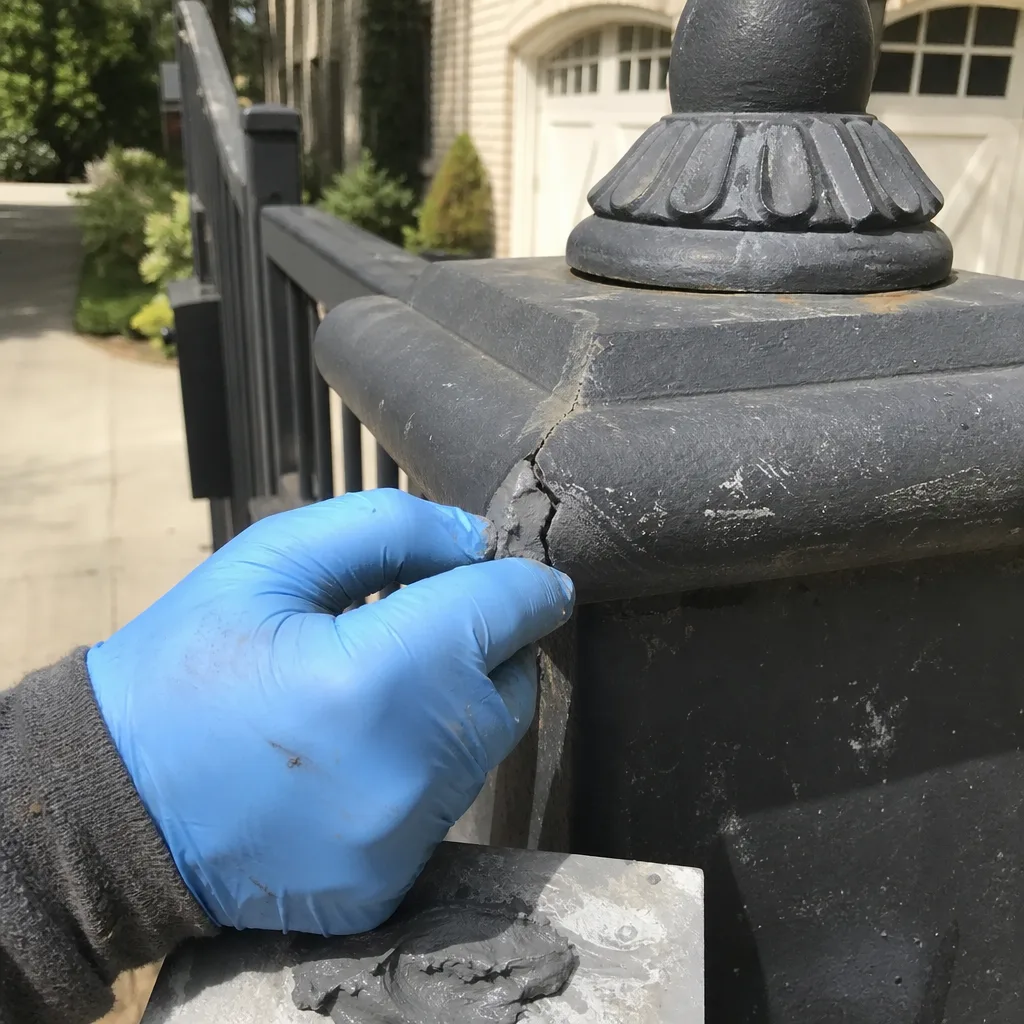
By mid-October in Johns Creek, the clay soil has begun rehydrating from summer dryness but hasn’t yet reached winter saturation. This is your last chance to establish baseline measurements before freeze-thaw cycles begin.
Here’s what we measure and document on every October inspection in Johns Creek:
- Post plumb in both axes. Use a 4-foot level on the hinge post and the latch post. Record the gap at the bottom of the level in 1/16-inch increments. A post leaning ⅛ inch at 4 feet will translate to measurable gate binding by February.
- Hinge pin wear. Lift the gate leaf manually (swing gates) or disconnect the operator arm and test for vertical play. More than ⅛ inch of vertical movement at the free end indicates the hinge barrel is ovaling. In Johns Creek’s heave-prone soil, worn hinges accelerate winter misalignment because the gate can’t float with post movement.
- Operator arm neutral position. With the gate fully closed, the arm should be at its mechanical center - neither pushing nor pulling. On a Gate Motor & Opener in Johns Creek, we record the limit-switch degree readings and photograph the display. If the closed limit is within 5 degrees of mechanical stop, winter heave will likely trigger an overload fault.
- Photo-eye alignment and lens condition. Georgia’s fall leaf drop peaks in late October. Clean lenses with optical-grade cleaner, not window spray, and record the receiver LED intensity if the unit provides it. A reading below 75% of spec means the alignment is marginal and will fail when winter debris accumulates.
- Drainage around posts. Verify that water sheds away from post bases. In Johns Creek’s clay, a 15-minute downpool that ponds at the post base will freeze into an ice lens that heaves dramatically.
Under Vance Gate Repair Johns Creek home service protocols, every October inspection leaves you with a written record of these five measurements, photographed evidence of hinge and post condition, and a clear statement of which readings are trending toward failure. If your hinge pin wear is at 3/16 inch and was 1/16 inch last October, we flag replacement before winter stress compounds it.
The threshold that triggers scheduling repair: post plumb beyond 3/16 inch in either axis, hinge vertical play exceeding ¼ inch, or operator internal temperature above 110°F during an October afternoon (indicating inadequate ventilation for the coming summer).
The March Service Window: Recovering from Freeze Cycles
Mid-March in Johns Creek is when the last hard freeze has typically passed but the clay soil hasn’t fully expanded from spring rains. This is the inspection that catches winter damage before summer heat amplifies it.
The March inspection repeats the October measurements with one critical addition: we compare the numbers. A post that was plumb in October and now leans ¼ inch has heaved. A gate that closed smoothly in October and now drags at the latch has shifted. These changes are not “settling” - they’re active damage that will worsen.
Specific March priorities for Johns Creek properties:
- Check for frost-jacked hardware. Bolts that were tight in October may be loose after heave cycles. We torque hinge bolts to manufacturer spec and mark them with paint pen for visual monitoring.
- Verify limit switch accuracy. On brands like Elite and DoorKing, the limit switches are potentiometer-based and can drift if the operator fought binding all winter. We run the full travel cycle and record open/close degree readings against the October baseline.
- Inspect control board for condensation residue. March humidity in Johns Creek often exceeds 80%. Operators with marginal seals may have accumulated moisture over winter. We look for corrosion on terminal blocks and white deposits on the board - early indicators that the enclosure seal is failing.
- Test battery backup if equipped. Winter cold reduces battery capacity. A battery that delivered 24 cycles in October may now manage 8. We load-test and record capacity.
The March window is also when we schedule any deferred hinge or post work that the October inspection flagged. Clay soil is workable, concrete can cure properly, and the repair will be stable before summer expansion begins.
One Johns Creek-specific note: properties in the Rivermont and Country Club of the South areas often have gates on slopes with engineered retaining walls. The drainage patterns around these walls create localized soil moisture that doesn’t match the broader neighborhood. We always check post bases against the wall drainage, not just general grade.
Summer Heat: Capacitor and Board Failures in Enclosed Operators
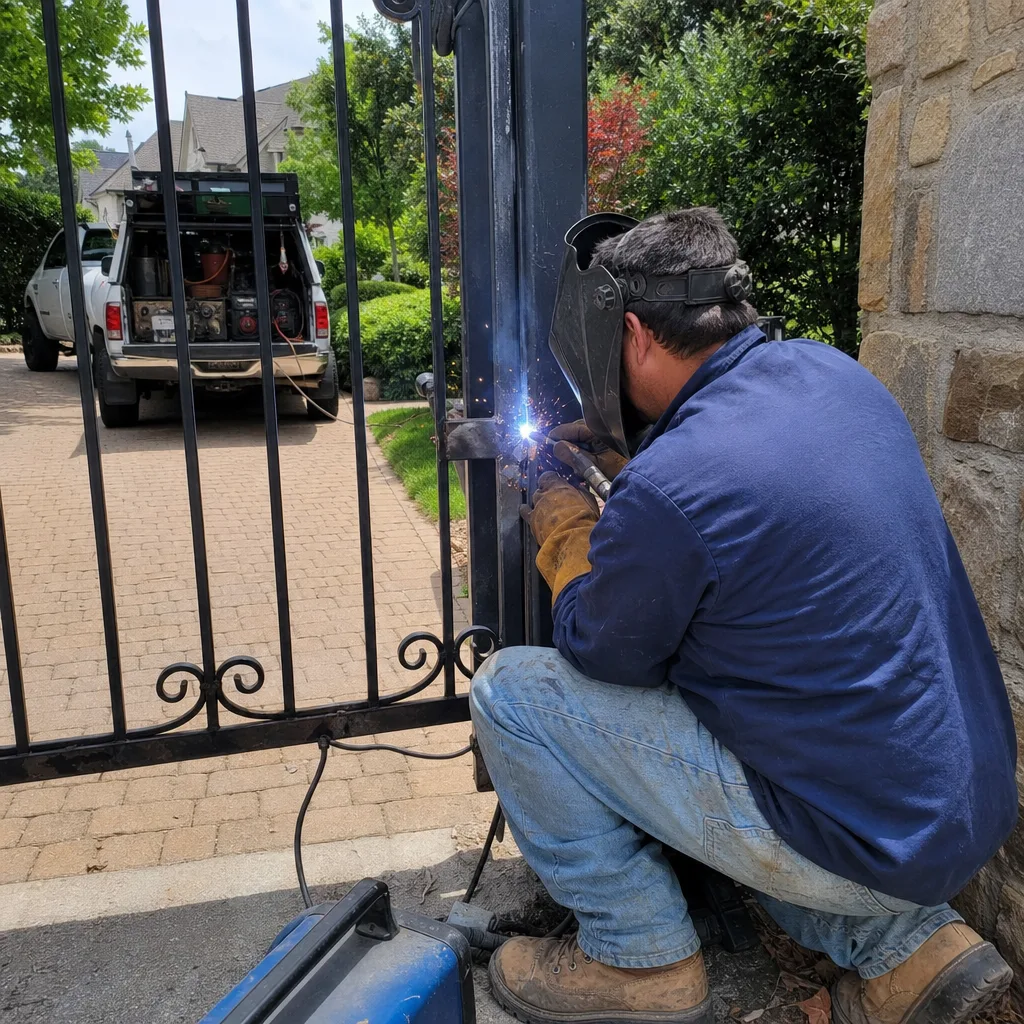
July and August in Johns Creek produce a specific failure pattern that we’ve documented across hundreds of service calls: heat-degraded control boards in operators with inadequate ventilation or sun exposure.
The mechanism is straightforward. Gate operators use electrolytic capacitors to smooth power supply ripple. These capacitors contain a liquid electrolyte that evaporates at elevated temperature. Manufacturer ratings typically specify 2,000 hours at 105°C, but every 10°C below that doubles the life. The inverse is also true: every 10°C above rated temperature halves the life. An operator running at 135°C internal - common in unshaded Johns Creek installations - experiences capacitor life of roughly 250 hours. That’s about one summer.
The symptoms progress predictably:
- Intermittent non-response to remote or keypad - the capacitor can’t maintain stable voltage during motor start
- Gate stops mid-travel on hot afternoons, restarts after sundown
- Complete failure with a control board fault code or no response at all
Prevention is cheaper than replacement. For Gate Repair in Johns Creek customers with operators in direct sun, we evaluate three options in order of cost:
- Operator relocation: Moving the unit to the north side of the post or adding a ventilated shade hood. Cost: $180-$340 depending on wiring extension needs.
- Ventilation modification: Adding screened vents to the operator housing (where manufacturer design allows) or replacing a solid cover with a louvered one. Cost: $90-$150.
- Board replacement with upgraded thermal spec: Some aftermarket boards use 125°C-rated capacitors. Cost: $280-$520 depending on brand.
The documentation matters here. Under Clause 4 (Evidence on every job), we photograph the internal board condition, record the capacitor brand and rating, and note the operator’s sun exposure. When the same customer calls in three years, we know whether the previous fix held or whether the thermal environment needs more aggressive intervention.
Brands vary in thermal resilience. In our Johns Creek experience, Ghost Controls units with their aluminum housings run cooler than steel-housed competitors. Mighty Mule’s entry-level units are particularly vulnerable in unshaded installations - we’ve replaced boards on units less than 18 months old that faced west without shade.
Georgia Pollen and Humidity: Cleaning Versus Realignment Protocols
Johns Creek’s pollen season, typically late March through early May, creates a gate maintenance problem that most homeowners misdiagnose. Yellow dust on photo-eye lenses doesn’t just block the beam - it creates diffuse reflection that makes the receiver think the beam is intact when it’s actually scattered. The gate closes on a vehicle or pet because the safety system failed “safe” in the wrong direction.
We distinguish between two protocols:
Cleaning protocol applies when the photo-eye LEDs show alignment within spec but the gate exhibits intermittent safety failures. Steps:
- Power down the operator - photo-eyes carry low voltage but live circuits near water and cleaner create risk
- Remove loose pollen with dry microfiber, not compressed air (which drives particles into the lens edge)
- Clean with optical-grade lens cleaner or 90% isopropyl alcohol on lint-free cloth
- Verify receiver LED returns to solid green or the manufacturer’s “aligned” indication
- Test obstruction response with a solid object at mid-height of the beam path
Realignment protocol applies when cleaning doesn’t restore consistent response, or when the receiver LED flickers regardless of lens condition. This indicates physical misalignment - the transmitter and receiver are not pointing at each other precisely. Causes in Johns Creek include:
- Post heave from winter freeze cycles shifting one housing
- Loose mounting bracket allowing vibration-induced drift
- Impact from landscaping equipment or animal contact
Realignment requires two people, a visible beam indicator or multimeter on the receiver circuit, and patience. We adjust in ⅛-turn increments of the mounting hardware, testing after each change. The goal is not “green LED” but “green LED with margin” - the beam should stay aligned through the full gate travel cycle and with moderate pressure on the mounting bracket.
Humidity creates a separate maintenance category: control board corrosion. Johns Creek’s summer humidity regularly exceeds 85%, and operators with compromised seals accumulate moisture on the board surface. The progression:
| Exposure Duration | Visual Indicator | Functional Impact | Recommended Action |
|---|---|---|---|
| 6 months | Light tarnish on terminal screws, no board discoloration | None yet | Seal inspection, desiccant pack replacement, reseal enclosure |
| 12-18 months | Green or white deposits on board traces near power input | Intermittent faults under load | Board cleaning with contact cleaner, seal replacement, humidity monitoring |
| 24+ months | Brown board discoloration, lifted traces, component corrosion | Hard failures, potential motor damage from erratic control | Board replacement, enclosure upgrade or relocation, humidity source elimination |
The six-month threshold is why we recommend October and March inspections - they catch seal degradation before the 12-month corrosion point. Once green deposits appear, cleaning becomes a temporary measure. The board has begun electrochemical migration that will progress even in improved conditions.
Building Your Year-Over-Year Gate Health Log
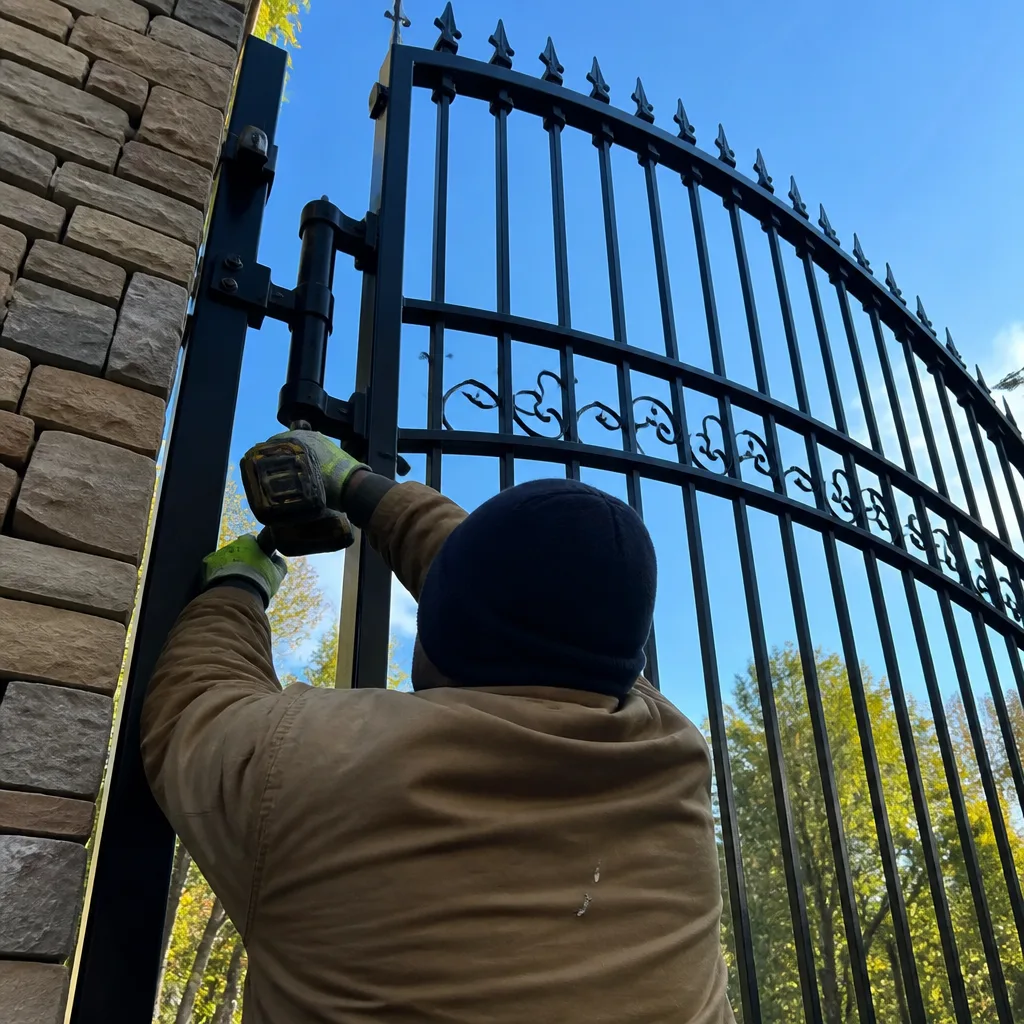
The most valuable tool for Johns Creek gate owners is not a maintenance checklist - it’s a comparison of measurements over time. A post that leans ⅛ inch is not necessarily a problem. A post that leaned 1/16 inch last October, ⅛ inch this March, and 3/16 inch next October is a predictable failure that will cost $800-$1,400 to remediate when it finally pulls the hinges out of alignment.
We provide every inspection customer with a standardized log format. Here’s the template:
| Measurement | Oct 2024 | Mar 2025 | Oct 2025 | Mar 2026 | Trend |
|---|---|---|---|---|---|
| Hinge post plumb (in/4ft) | 1/16 | 1/16 | ⅛ | - | Monitor |
| Latch post plumb (in/4ft) | 0 | 0 | 1/16 | - | Stable |
| Hinge vertical play (in) | 1/16 | ⅛ | 3/16 | - | Schedule replacement |
| Operator close limit (deg) | 87 | 85 | 82 | - | Binding increasing |
| Operator open limit (deg) | 93 | 94 | 95 | - | Arm compensating |
| Photo-eye receiver (%) | 92% | 88% | 79% | - | Realign |
| Internal temp, 2pm (°F) | 102 | - | 118 | - | Add ventilation |
The trend column is where prevention happens. “Monitor” means check again in six months. “Schedule replacement” means call before the next damaging season. “Binding increasing” means the gate is working harder against misalignment, stressing the operator motor and accelerating wear.
For Gate Installation in Johns Creek customers, we start this log at commissioning and hand it over with the final documentation. For repair customers, we begin with the first service call and build backward from whatever history we can reconstruct.
The log also serves warranty and insurance purposes. If a gate fails within the 365-Day Done Right Promise window, the documented baseline proves whether the failure was related to our work or to progressive conditions we identified and reported. Under Clause 4, you keep the photo record; we file the job record. Both reference the same measurements.
Common Mistakes to Avoid
- Applying northern “winterization” advice. Wrapping an operator in Johns Creek traps humidity against the housing and accelerates corrosion. The actual winter risk is post heave, not frozen mechanics - focus on drainage and post stability, not insulation.
- Cleaning photo-eyes with Windex or household glass cleaner. Ammonia-based cleaners leave a residue that attracts pollen and creates worse long-term performance than dirty lenses. Use 90% isopropyl alcohol or optical-grade cleaner only.
- Ignoring intermittent failures that “fix themselves.” A gate that stops mid-travel at 3pm but works at 7pm is not a glitch - it’s thermal degradation of a capacitor or board trace. The failure will become permanent, usually at the worst possible time.
- Measuring only once. A single inspection snapshot tells you condition, not trajectory. The homeowner who saved $150 skipping the March inspection often pays $600 for emergency summer board replacement.
- Assuming all operators need the same maintenance. A Ghost Controls unit in aluminum housing on a shaded post has different thermal needs than a Mighty Mule unit in steel housing facing west. Maintenance protocols should match the specific equipment and installation, not a generic schedule.
- Delaying hinge replacement until the gate won’t move. Worn hinges in Johns Creek’s heave-prone soil accelerate post damage by transferring dynamic loads the post wasn’t designed for. A $220 hinge replacement prevents a $1,100 post reset.
- Using pressure washers near control enclosures. The force drives water past marginal seals. We’ve opened operators where the homeowner “cleaned” the housing and the board showed water staining to a depth of two inches.
When to Call a Professional
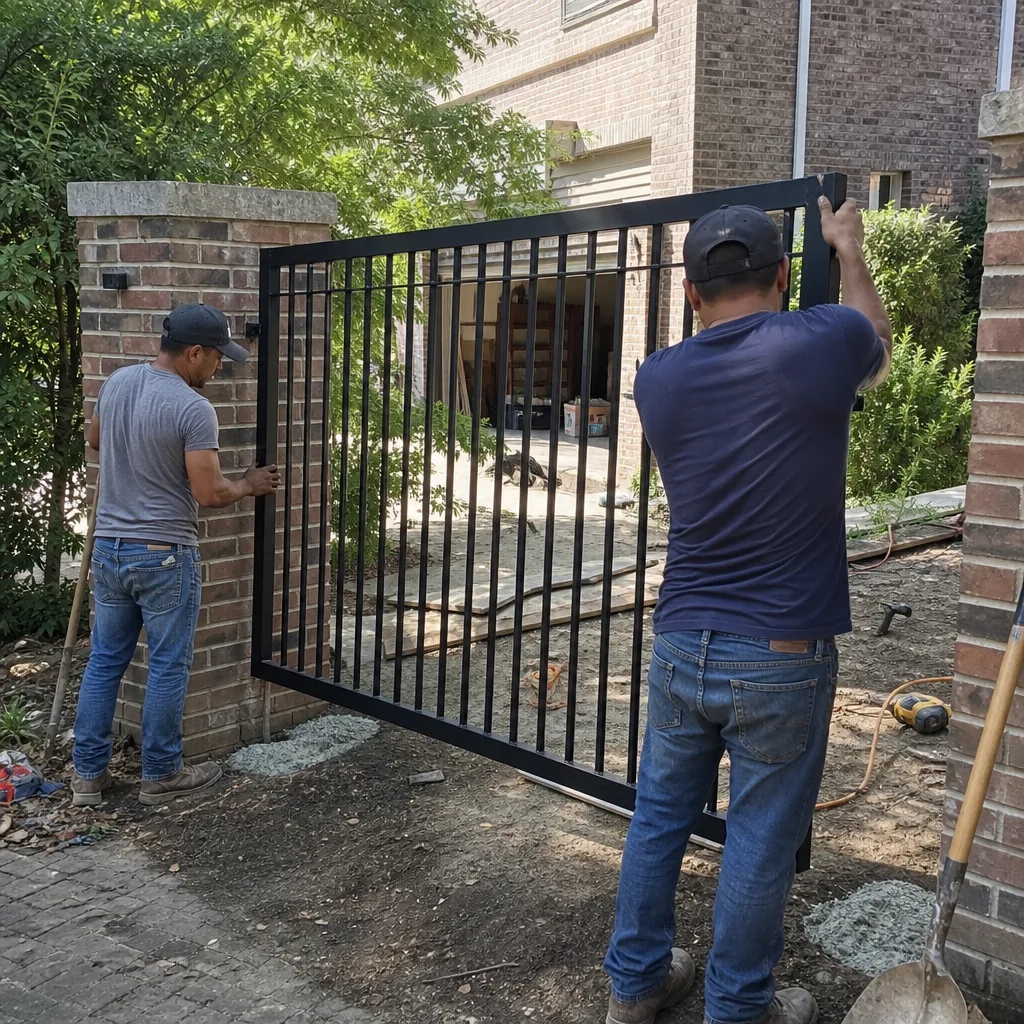
Some gate conditions in Johns Creek require immediate professional attention: a gate that has shifted suddenly after a freeze event and now binds visibly; any smell of electrical burning from the operator enclosure; a gate that reverses direction unexpectedly or fails to respond to safety devices; or structural damage to posts, hinges, or the gate leaf itself. For context on when to handle issues yourself versus calling a pro, see our DIY vs Professional Gate Repair: The Johns Creek Homeowner’s Decision Guide.
We also recommend professional evaluation when your year-over-year log shows trending degradation in any measurement, even if function seems normal. The cost of preventive adjustment is consistently lower than emergency repair.
Vance Gate Repair Johns Creek offers free estimates in Johns Creek - call (678) 394-1765. A live person answers 24 hours a day. We’ll review your existing documentation, take baseline measurements if you don’t have them, and provide a written scope and price before any work begins under Haven Standard Clause 1.
Frequently Asked Questions
A preventive inspection with full measurement documentation runs $120-$180 for a single swing or slide gate, depending on access and whether the operator brand requires proprietary diagnostic tools. Repairs identified during inspection are quoted separately with written prices before work starts. Call (678) 394-1765 for an exact quote - estimates are free.
Homeowners can safely clean photo-eye lenses, clear debris from the gate path, and verify that posts appear plumb by eye. Measuring post plumb precisely, testing hinge wear, evaluating control board condition, and adjusting limit switches involve live electrical circuits and mechanical forces that can cause injury or equipment damage. We recommend professional inspection for the measurement and electrical portions of seasonal care.
Twice yearly: mid-October before winter heave season, and mid-March after freeze cycles have passed but before summer heat begins. Gates on properties with poor drainage, heavy tree cover, or west-facing unshaded operators may benefit from a third inspection in June.
If any repair we complete fails within one year due to workmanship or part defect, we return and make it right at no additional charge - no argument, no fee, no expiration date within that window. This applies to all completed work, not just specific components. The promise is documented in writing on every invoice under Haven Standard Clause 3.
This pattern almost always indicates thermal stress in the control board or capacitor. Morning temperatures allow marginal components to function; afternoon heat pushes them beyond their degraded capacity. The failure will worsen and eventually become constant. Schedule inspection before the component fails completely - afternoon-only symptoms give us diagnostic information that disappears once the failure is total.
We service nine major automation brands: LiftMaster, FAAC, BFT, Linear, Viking, Ghost Controls, DoorKing, Elite, and Mighty Mule. We do not steer customers toward replacement when repair is viable - our pricing and recommendation depend on the specific failure, the age and condition of the equipment, and your long-term plans for the property. Bring us a written estimate from another company and we’ll provide a free second opinion under Haven Standard review.
The Bottom Line
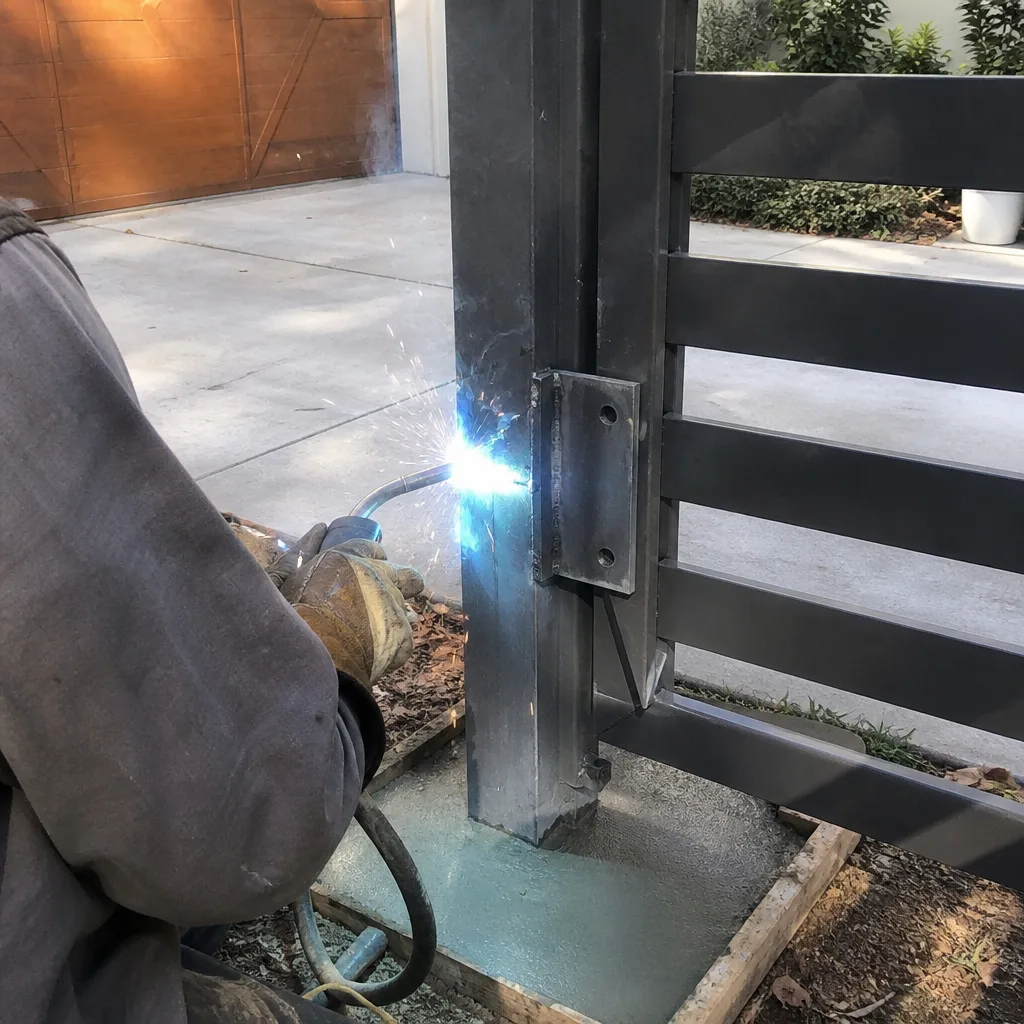
Johns Creek’s gate maintenance calendar has two damaging seasons and two repair windows - not four equal quarters. Summer heat destroys control boards through thermal degradation; winter freeze-thaw heaves posts and misaligns hardware. The October and March inspections catch these problems while they’re still measurements trending wrong, not emergency failures at inconvenient hours. Document everything year-over-year, distinguish cleaning from realignment protocols, and match your maintenance to your specific equipment and installation conditions rather than generic advice written for climates that don’t match Georgia’s clay-soil reality. For deeper detail, see The Complete Guide to Gate Repair in Johns Creek.
Written by Adrian Vance, Owner at Vance Gate Repair Johns Creek, serving Johns Creek since 2014.